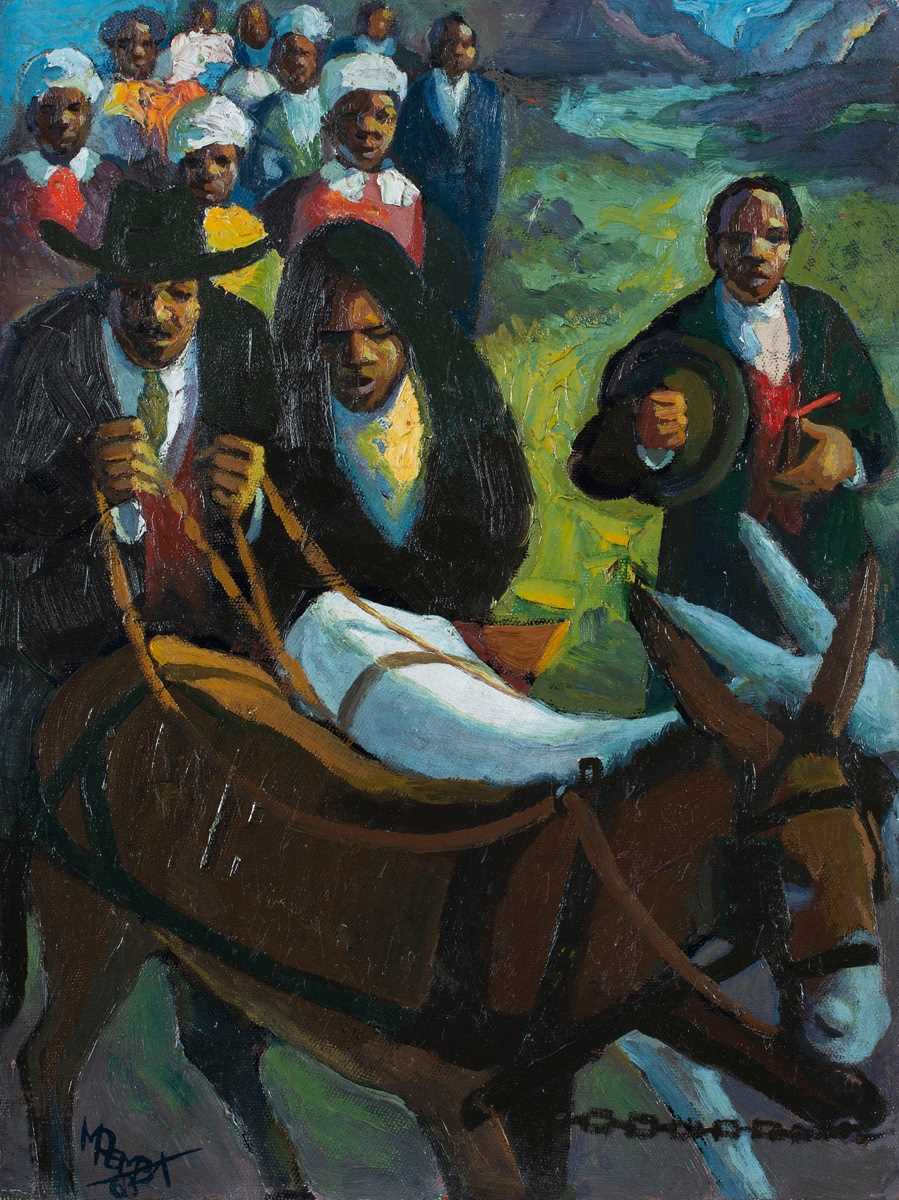
The Funeral ,1968
Herkunft :
Exhibited :
Literature :
Anmerkung : George Pemba is one of the artists most typical of the under-represented generations of black artists neglected in the South African art establishment in the second half of the twentieth century who have come to critical and collector attention in the decades since.Born in the Eastern Cape, and commencing a storied career as a full-time artist in the 1940s, he spent the entirety of his long life in South Africa. Yet he only came to mainstream prominence after a 1991 retrospective exhibition at Everard Read Gallery in Johanneburg. He had exhibited widely prior to that point, but never at prominent galleries – as with many other black artists working through the apartheid era, Pemba was denied access to mainstream exhibition and gallery networks on account of his race. For Pemba, even the work on the Everard Read show was not properly compensated after a white art dealer bought most of the works on show at a discount and brokered the selling exhibition without the artist’s knowledge. To its credit, Read offered the artist a sales percentage when they discovered the situation.Pemba’s entire career is marked by his commitment to narrative. The imperative to storytelling in his circumstances is not hard to understand. For anyone with an artistic talent working in South Africa’s townhips during apartheid, the wish to document a repressed and misrepresented life was dominant. When Pemba had mastered his technique in oils by the time this remarkable work was painted in the late 1960s, he had also mastered a sense of drama and dynamism in his realist and narrative paintings that is pefectly illustrated here. Sadly, even in the late 1960s, the social institution of the funeral for beleaguered black South Africans was already all too familiar. Pemba’s depiction brings not only pathos, but colour and a deep sense of community to a mournful scene.
James Sey
Condition_report :