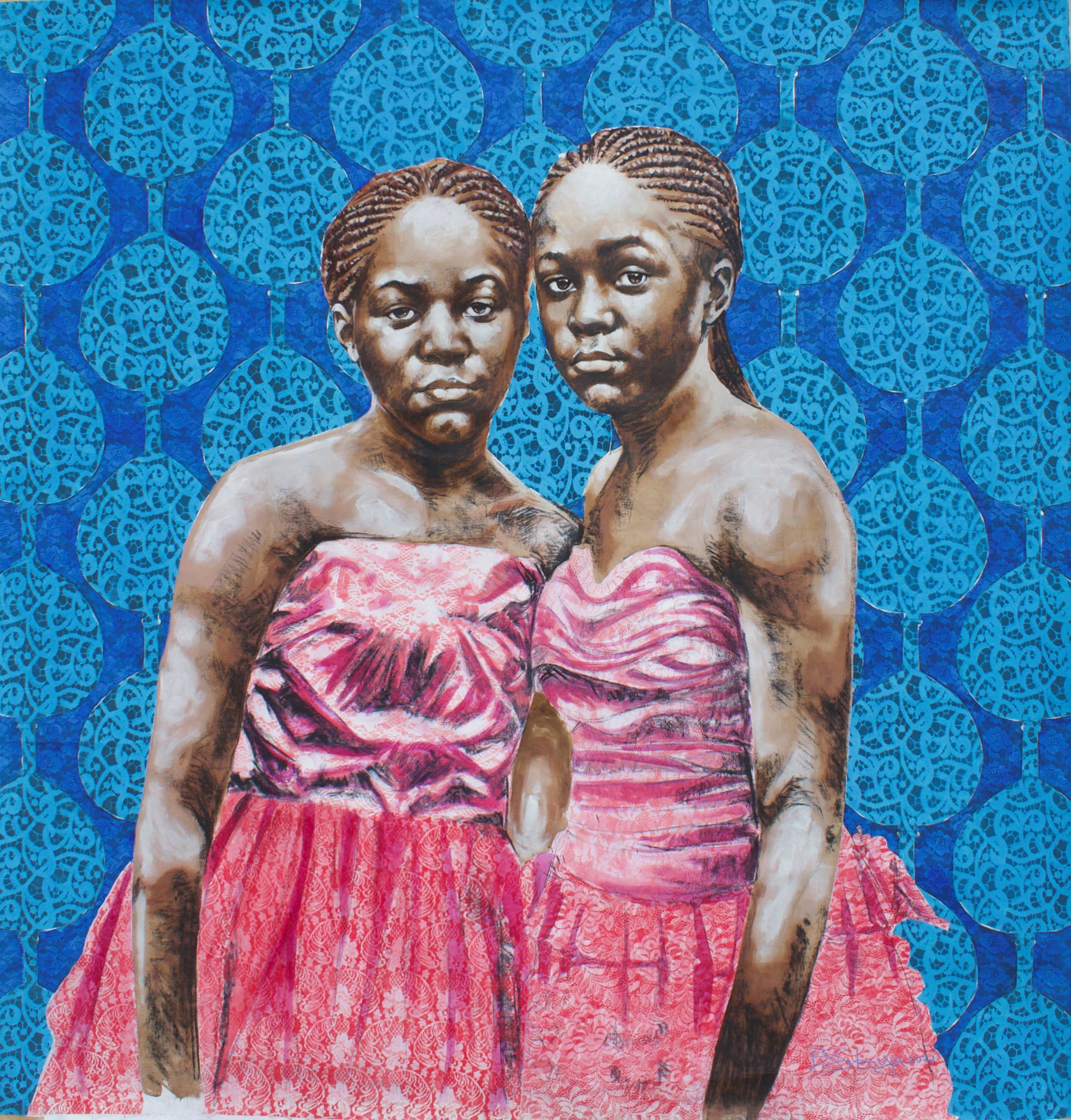
I got your back
Schätzung (niedrig/hoch) :
Herkunft : Courtesy of Everard Read Gallery
Anmerkung : Bambo Sibiya was born in Springs and his work has rapidly found an active market being bought inter alia by private collectors and public curators. His skill and virtuosity and deeply felt empathy and engagementwith community challenges, places this young artist on the threshold of a bright future. His supporters feel that an investment in this young artist’s career is an investment in the talent of the best and brightest that SouthAfrica has to offer. AWARDS : Ekurhuleni Art Award Finalist in 2008 - “Top Student of the Year” Award at Artist Proof Studio in 2009 - Thami Mnyele Award, Semifinalist in 2009 - Thami Mnyele Award, Merit Award, EkurhuleniArt on Paper in 2010 - Thami Mnyele top 10 in 2011 - Semifinalist in the ABSA Atelier top 100 in 2010 Finalist in the ABSA Atelier top 10 Awards in 2011 - BRT Public Art competition in 2011 - ABSA Atelier Merit Awards in2012 -Winner of the Absa Atelier Gerald Sekoto Award 2012 - Arts and Culture Trust Award 2012
“Bambo Sibiya has long been preoccupied with imagery of “Swenka” culture. His dapper figures of men dressed in their finery, crowded around radios or board games are instantly recognisable. These figures represent both a stubborn presence and a marked absence in South African history. - Their presence in the context of our history was a direct result of the dislocation of black South Africans, out of the cities and to rural areas where jobs and opportunities were scarce. This dislocation was formalised by the Group Areas Act in 1950. Men were offered work on the mines around Johannesburg and were required to stay in hostels, where thousands of men lived in degradingly cramped, unsanitary and inhumane conditions. Their work was physically demanding, and performed under the constant watch of the foremen who demanded long hours of labour in dangerous conditions for very little compensation. These men left their wives and children to perform this labour in order to provide for their families, but the resulting decimation of the traditional family structure has left an indelible scar on our society. - Families were left in rural areas without fathers, uncles, brothers and sons. In our digital age it is easy to forget that cell phones and telephones, in general, are a luxury and that, during that time in our history, means of communication were limited. The radio offered a vital means of communication for families. A particular show, called “ngikhonzele”, allowed listeners to call in and send messages to their loved ones living far away. Radios were an integral feature of the hostels, they were a means of communication, sustaining familial ties and through messages of love and support, and also a source of entertainment.” Mark Read