Tree
Herkunft :
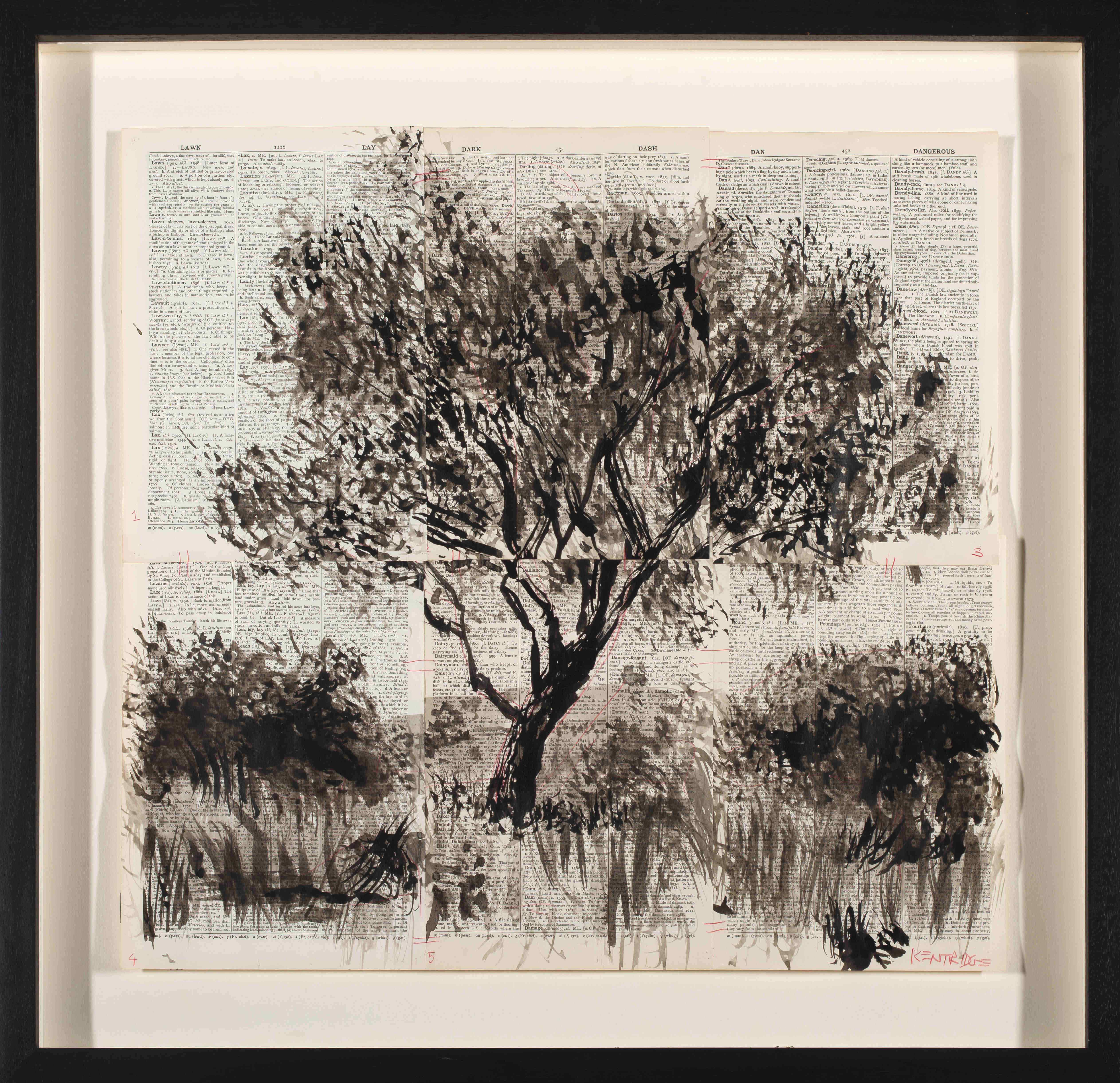
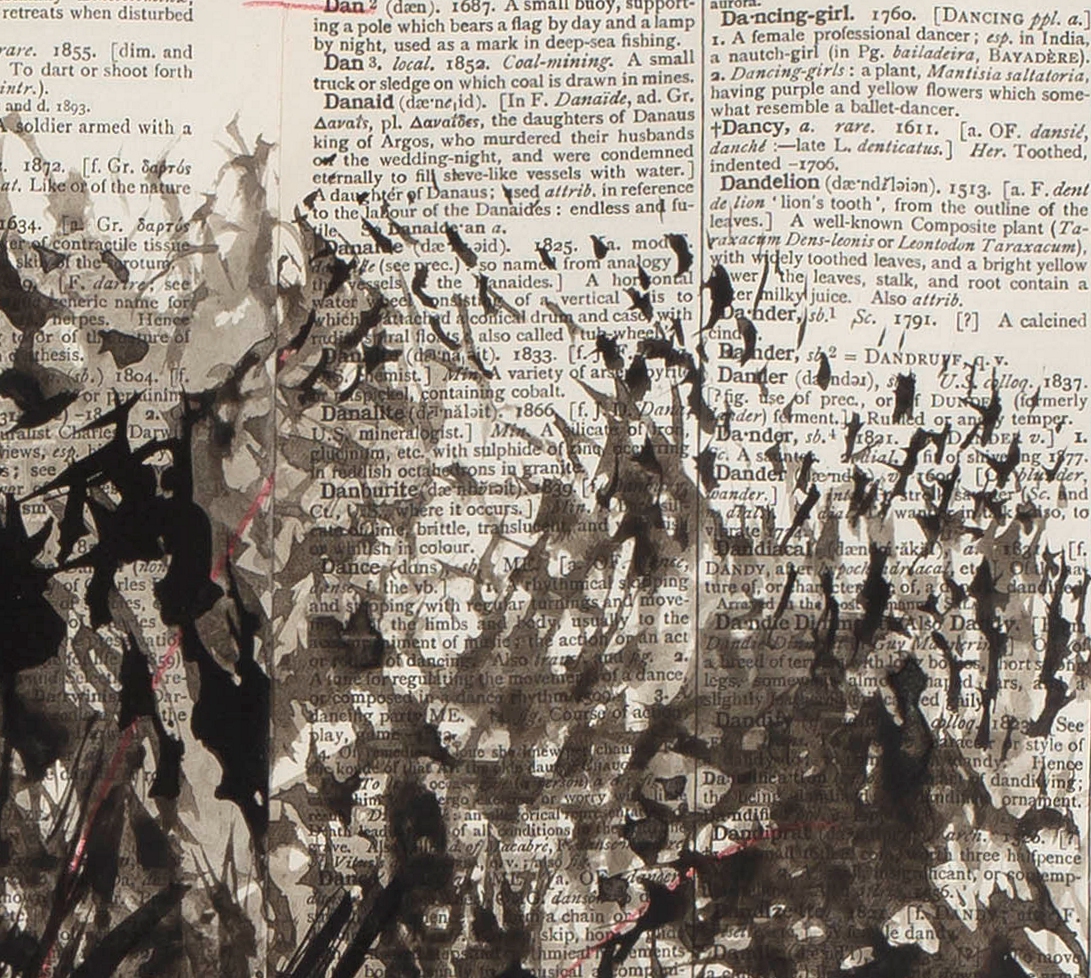
Anmerkung : The tree is an important motif in William Kentridge’s recent work. A sharp critic of South Africa’s earlier landscape tradition, he generally avoided flora in his early drawings and printmaking. His print suite Sleeping on Glass (1999), which included three etchings depicting trees, marked a change in attitude. Since 2010 he has produced various works on paper, including a series of Indian-ink drawings of trees presented over multiple pages from books. The torn pages are individually painted and then pieced together in the manner of a puzzle. This manner of composing an image has deep biographical significance.
The artist’s father, Sir Sydney Kentridge, was a defence lawyer in the Treason Trial (1958–61). Kentridge was still a young boy at the time. He conflated this detail with a mosaic table at the family home in Houghton to sound out his father’s labour as involving work at the ‘Trees and Tile’. When his wife, Dr Anne Stanwix, saw that he was making trees out of different sheets of paper that go together, like tiles, she exclaimed, ‘Oh my god, you’re still painting the Treason Trial!’¹
Kentridge’s tree drawings share visual affinities with JH Pierneef’s much-admired linocuts, but the impulse underpinning their creation is different. Kentridge is interested in the provisional or temporary nature of images. Trees, he has stated, can become paper, books and tables, or even smoke and ash.² They can also be a marker of privilege and surplus in a private garden – ‘To not need the tree for either wood or fire is a luxury’ – as well as reminders of mortality. Kentridge’s parents planted two white stinkwoods in their garden when he was a child. Decades later, one was struck by lightning and died. ‘How could the tree die before me? No. If the tree could die, how vulnerable are we or am I?’³
1. William Kentridge (2013) Thinking on One’s Feet: A Walking Tour of the Studio (speech), Humanitas Visiting Professorship in Contemporary Art, University of Oxford.
2. William Kentridge and Rosalind Morris (2017) That Which is Not Drawn, London: Seagull Books, page 61.
3. William Kentridge and Jane Taylor (2018) That Which We Do Not Remember, Sydney: Naomi Milgrom Foundation, page 76.