Head ,
Provenance :
Exhibited :
Literature :
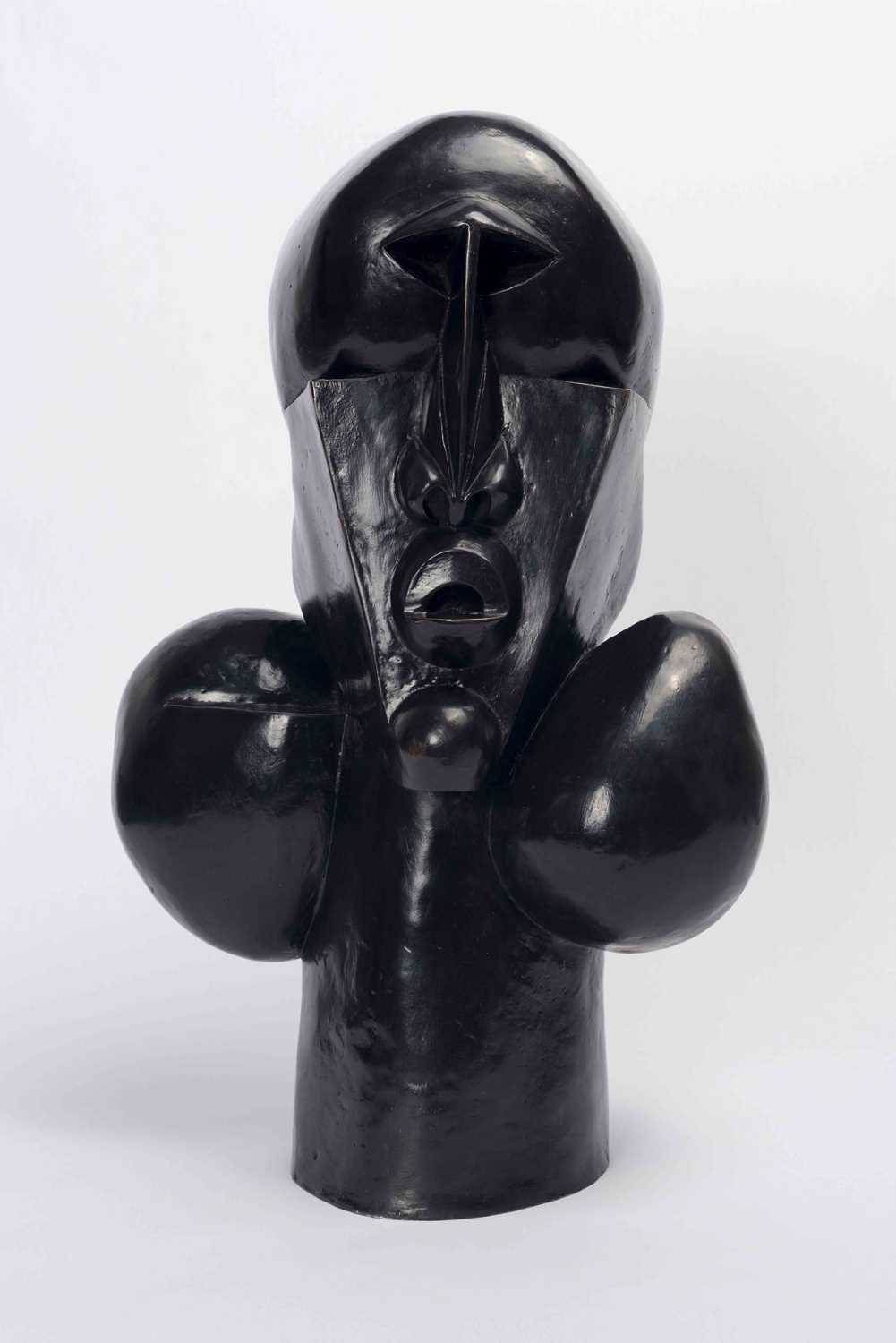
Notes : The late Dumile Feni (1939-1991) is indisputably one of South Africa’s most gifted visual artists. From the onset, his work retains a powerful streak that combines visceral intensity and craftsmanship. Forced into exile in 1968 by the Apartheid regime — never to return home alive again — Feni placed an emphasis (by gradually mastering his line work) on the deranged and displaced interiority of his subjects, that even today haunts us despite an alleged change in our society. Despite prevailing attempts at the time to trivialize him or the circumstances that somewhat restrained his creativity, Feni not only came to masterfully handle various mediums (sculpture, drawing, and even film) with precocious determination but also refused to be derailed from depicting, often quite disturbingly (which is also to say beautifully), prevailing (if mundane) social ills that tormented his surroundings. It’s the dissonance between the beauty and the terror that pervade the aesthetic and affective qualities of his work, that we see emerging in this sculpture quite forcefully. From the discordant intimacy between softness and hardness, to the jarring angular lines cutting through, or juxtaposed against rotund shapes, the architectural quality of this work, repeat, but with a unique caveat, the repertoire of Feni’s oeuvre of elongated faces, and indeed his fascination with faciality, characteristic of his head sculptures. If the Other’s face makes demands on us, summons us to bear our own witness, then Feni’s heads have been a form of such a solicitation; a face-to-face bearing with or accounting for the existential travails of an othered reality. What we see here is ostensibly a physical deformity but is actually a wounded spirit; a kind of social leprosy that our faces bare in the historical instance. Dumile Feni here, once more, is swinging.
Athi Mongezeleli Joja.
Condition_report :