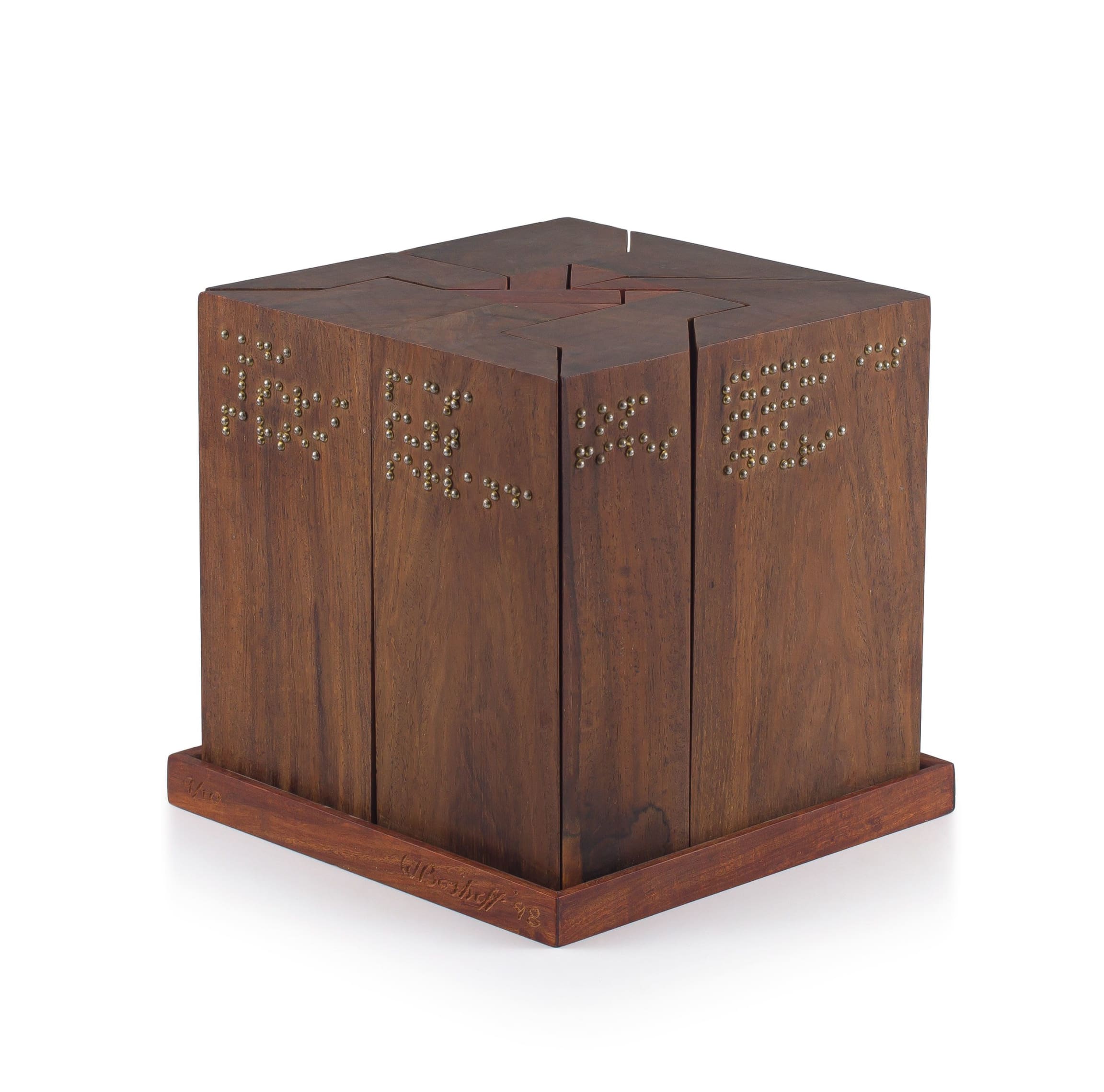
Seven Pillars of Justice
Procedencia : SMAC Gallery, Cape Town.
Private Collection.
Literature : Ivan Vladislavic (2005) Taxi-011: Willem Boshoff, Johannesburg: David Krut Publishing, illustrated in colour on pages 61 and 62.
Notas : Seven Pillars of Justice is a work of art made by Willem Boshoff as commissioned by the Law Faculty of the Rand Afrikaans University. It was presented to Professor Frans Malan on 27 June 1997 as a token of appreciation for services rendered over a period of 27 years and in celebration of his appointment as judge on 1 July 1997.
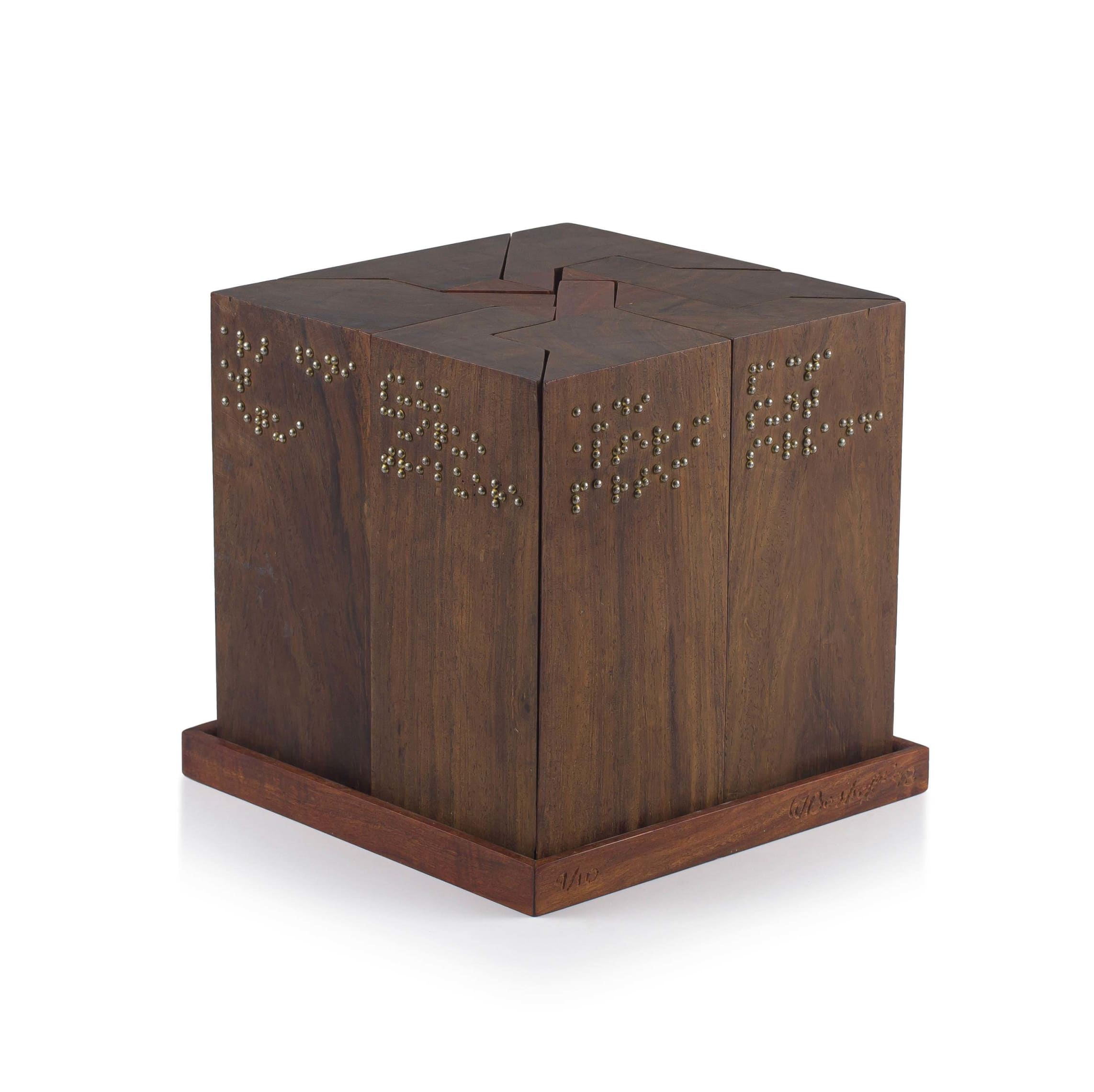
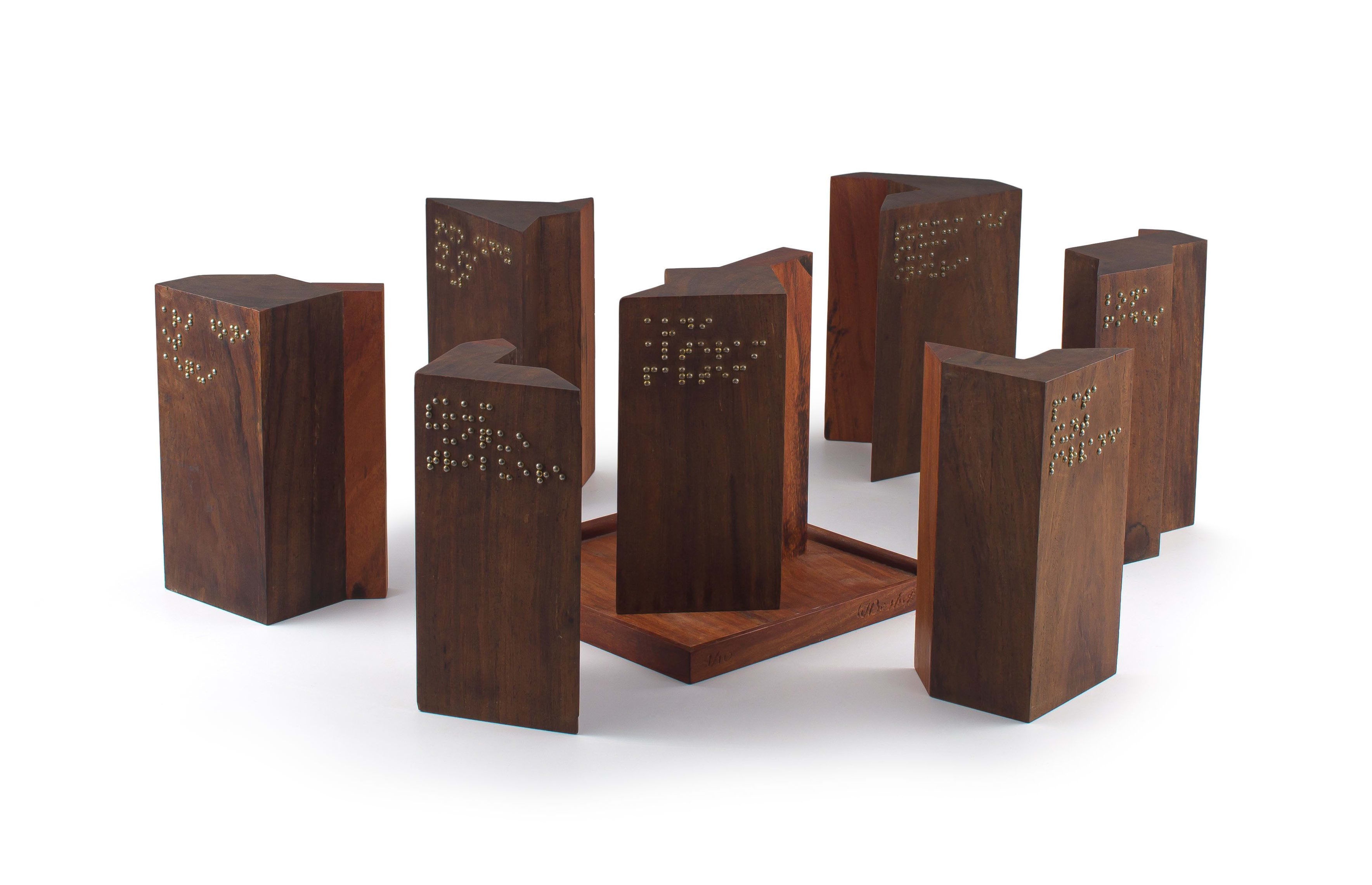
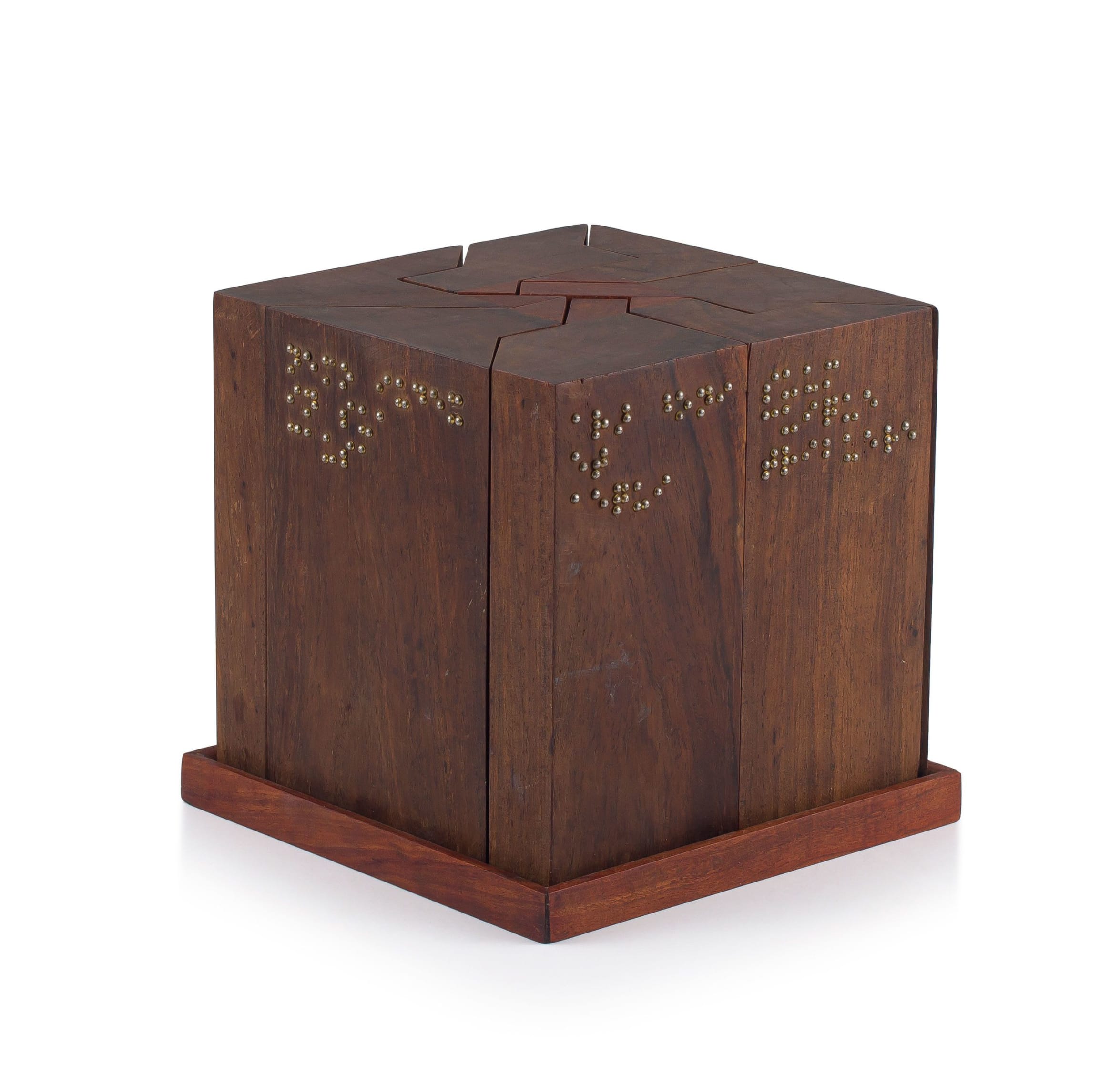
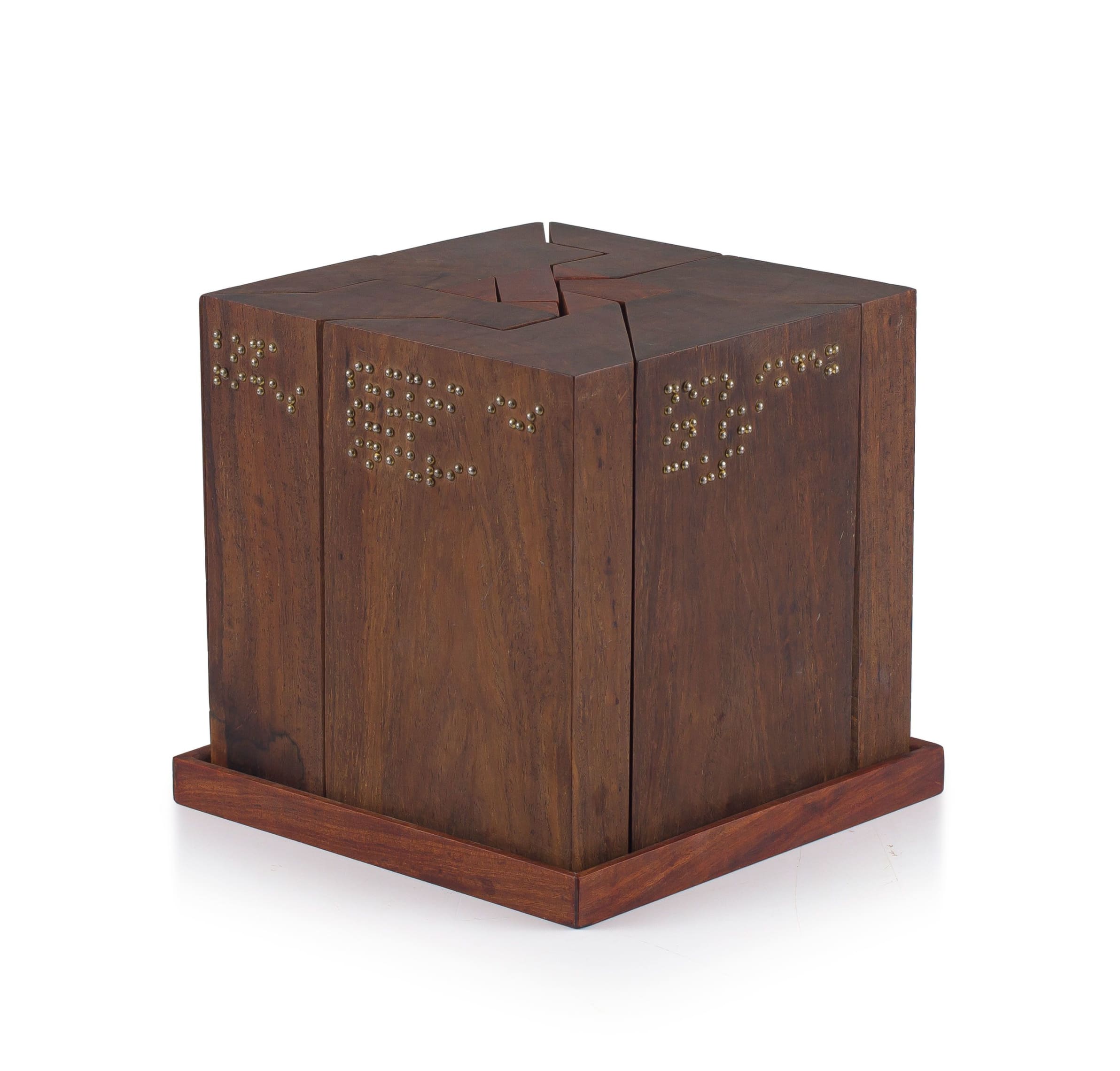
Frans Malan and Willem Boshoff planned together on the idea supporting the work. The administration of justice and a contemplation of the facts of a case and the legal rules are linked to a sensibility obtained by a testing and fitting, much like the one used in piecing together the segments of a broken puzzle. The well-known Seven Pillars of Wisdom of Sir Lawrence of Arabia served as point of departure. Proverbs 9:1 mentions seven such pillars without naming them specifically. For the work, seven pillars that join together into a singular solid block were sculpted and each piece was linked to with a specific judicial maxim as identified by Frans Malan.
1. ARS BONI ET AEQUI (The art of the good and equitable)2. SUUM CUIQUE TRIBURE (To give everyone his due)3. PACTA SUNT SERVANDA (Contracts shall be performed)4. BONA FIDES (Good faith)5. AUDI ALTERAM PARTEM (To listen to the other side)6. SUMMUM IUS SUMMA INIURIA (Perfect law is the highest injustice)7. NEMO IUDEX IN SUA CAUSA (No-one shall be a judge in his own defense)
These maxims were written in Braille to convey the idea that justice is 'blind'. The blind-folded Justitia judges the facts of a case without paying attention to the social standing, race or personal attributes of the parties. To put Latin maxims in Braille is to further deepen the conundrum of the law: ignotum per ignotius, the unknown is encircled by the even less known.
Frans Malan wanted to illustrate the interaction between the hard and fast legal rules (ius strictum) and the more yielding adaptability of our common law (ius honorarium). The balance between these two aspects of the law is of cardinal importance with the one always existing within the other. These two realities present two unique entanglements, - a labyrinth within a labyrinth. The judicial concern with the 'flesh and blood' of human nature is portrayed by a small, central puzzle in a red wood (Zambezi-teak Baikiaea plurijuga). In contrast to this, the rigid, concrete structure of the law was made as an enclosing puzzle in a black, stone-like wood (Leadwood Combretum Imberbe). Each of the seven pillars in the labyrinth is thus composed of a hard exterior tempered by a soft nucleus.1
1. https://www.willemboshoff.com/product-page/seven-pillars-of-justice, accessed on 27 August 2021.