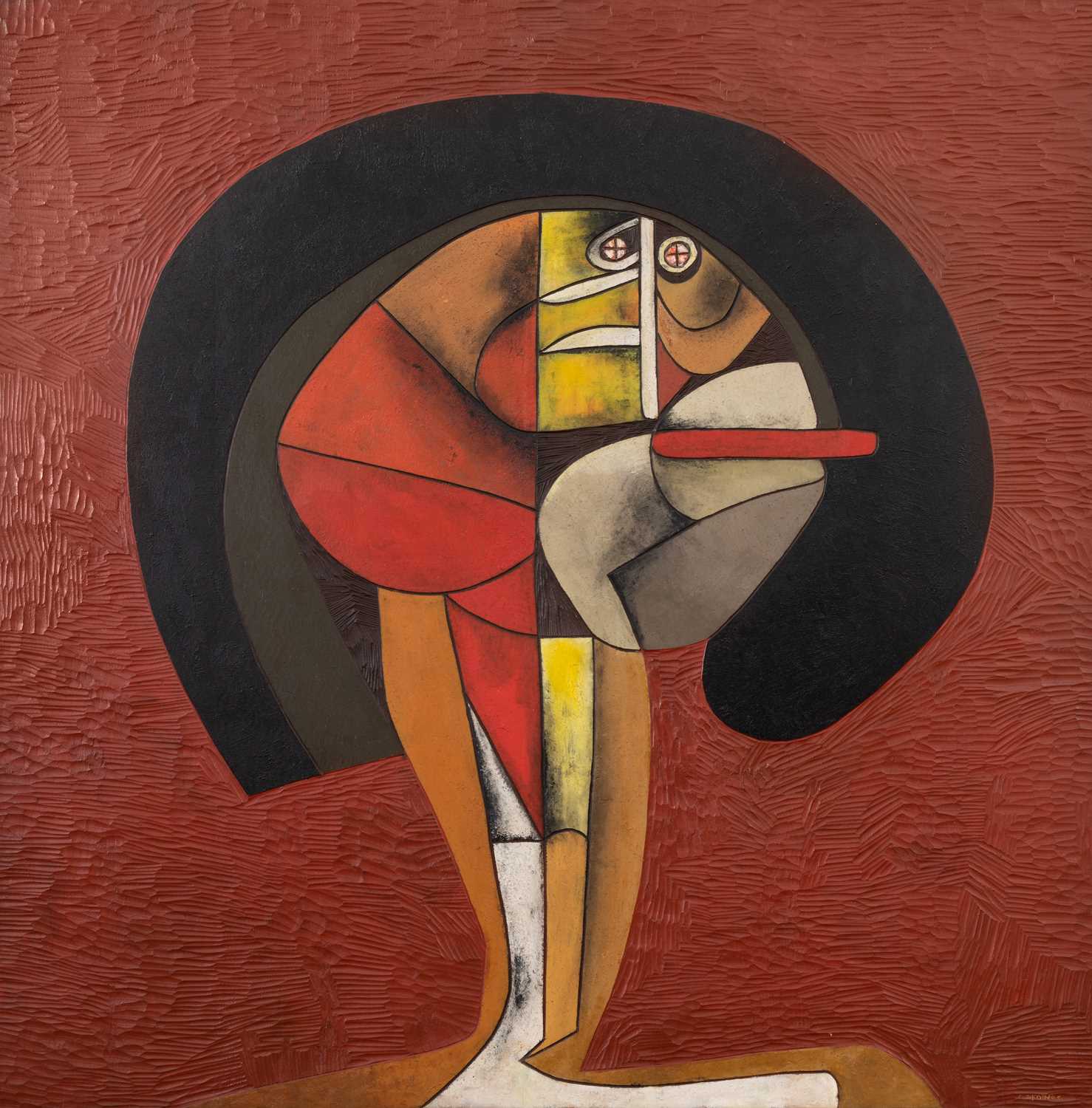
Head ,
Procedencia : Private collection, Cape Town.
Jeremy Stephen Antiques, Johannesburg.
Estate of South African artist, Lionel Hinwood.
Exhibited :
Literature :
Notas : Cecil Skotnes formed part of a group of groundbreaking post-war artists who sought to establish a uniquely South African vernacular in their art – moving away from the largely conservative, Eurocentric works of the early 1990s. Skotnes’s unapologetic pursuit of this mission shaped much of his artistic development and defines much of his legacy today.
When Egon Guenther introduced Skotnes to woodcut printing in 1954, he encouraged the artist to envision the wood block as an independent art form of its own – to be incised and painted outside of the printmaking method. For Skotnes, this was a turning point. The medium conjured up images of local traditional arts, where wood is a favoured material and provided a vehicle through which he could develop his own idiosyncratic artistic language.
Almost twenty years later, by the time he created Head, Skotnes had mastered the art form with which he is synonymous today. His carving of line is controlled yet rhythmic, enhancing both tone and texture. Whereas earlier works were rendered in more subdued colours, here the artist is confident in his use of striking yet earthy tones of red, ochre and black. These formal elements come together to present a single, totemic figure in the centre of the panel. The abstraction of the figure gives a nod to the stylised works of Pablo Picasso and Henry Moore, of whom Skotnes was a great admirer. However, this figure is undoubtedly, uniquely African, and a celebration of Skotnes’ refinement of his own artistic individuality at the height of his career.
Lisa Truter
Condition_report :