

This silver gelatin print captures a moment in September 1962, featuring a pensioner seated beside a young child in Wheatlands, Randfontein, Transvaal. The photograph reflects the social dynamics of the time, showcasing the relationship between the elderly and the children of domestic workers in a rural South African landscape.

This hand-printed gelatin silver print by David Goldblatt depicts a house-painter in his home on Pretoria Street, Hillbrow, in January 1973. The photograph captures the essence of everyday life, showcasing the subject in a candid moment, reflecting the social context of the time.

In this platinum print by David Goldblatt, a solitary miner is depicted waiting on the bank, poised to enter the depths of the City Deep Gold Mine. The image, created in 1966, captures the stark reality of mining life, emphasizing the miner's anticipation and the surrounding industrial environment.
This artwork features Daniel Cloete, a goat farmer from Pootjiespram in the Richtersveld, Northern Cape. The archival pigment ink on cotton rag paper captures the essence of rural life, showcasing Cloete's connection to his environment, likely highlighting the arid landscape and his goats, emphasizing the themes of agriculture and resilience.

This silver gelatin print captures the Doornfontein Synagogue, showcasing its architectural details and the surrounding environment. The artwork, created by South African artist David Goldblatt, reflects a moment in time, emphasizing the significance of the synagogue within its community. The print is presented on fibre-based paper, highlighting the textures and contrasts inherent in the medium.

This digital print captures the transformed landscape of a tailings dump at the Owendale Asbestos Mine in Northern Cape, South Africa. The artwork reflects on the environmental impact of mining and reclamation efforts, showcasing a blend of natural and industrial elements. The piece is signed and numbered, emphasizing its limited edition status.

This digital print by David Goldblatt features a studio portrait of an artist, capturing a moment of introspection. The composition likely emphasizes the artist's personality and creative spirit, set against a backdrop that reflects an artistic environment. The archival cotton rag paper enhances the depth and detail of the image.

This digital print by David Goldblatt depicts Kevin Kwanele's Takwaito Barber on Lansdowne Road in Khayelitsha, Cape Town. The artwork reflects the social context of the AIDS crisis in 2007, showcasing the barber shop's interior and patrons, conveying a sense of community and resilience amidst adversity.

This digital print by David Goldblatt captures the essence of Gamkaskloof, a remote valley in South Africa. The artwork likely features rugged terrain, dramatic landscapes, and a sense of isolation, rendered in rich detail on cotton rag paper. The framed piece measures 33.5 x 38.5 x 4.5 cm, emphasizing its significance as a representation of South African heritage.

A poignant landscape depicting numerous white crosses erected by farmers in a rural area, commemorating victims of farm murders. The scene captures the stark beauty of the Limpopo district, with dry grasses and sparse trees under a muted sky, evoking a sense of loss and protest against violence. The composition highlights the contrast between the crosses and the natural surroundings, emphasizing the gravity of the memorial.

This archival pigment print captures a serene stoep scene in Hondeklipbaai, Northern Cape, dated 13 September. The artwork reflects the unique architectural and cultural elements of the region, emphasizing the simplicity and beauty of everyday life. Signed, dated, and numbered 1/10, it is a limited edition piece that showcases David Goldblatt's keen eye for detail.

This silver gelatin print by David Goldblatt captures a powerful moment, likely illustrating the profound effects of violence, as suggested by the title 'Crippled By A Stray Bullet.' The artwork may convey themes of suffering, resilience, and the human condition, rendered in a stark, monochromatic style characteristic of Goldblatt's work.

This archival pigment ink artwork by David Goldblatt captures the rugged landscape of Echo Canyon in Richtersveld, South Africa, showcasing the natural beauty and unique geological features of the region. The piece is printed on high-quality cotton rag paper, emphasizing its detail and texture.

This artwork by David Goldblatt presents a panoramic view of Johannesburg from the southwest, capturing the city's architectural diversity and urban environment. Created using archival pigment inks on high-quality cotton rag paper, the piece measures 98.5 x 123 cm, emphasizing the intricate details of the cityscape.

This archival pigment ink photograph by David Goldblatt presents a panoramic view of Johannesburg from the southwest. The artwork, measuring 98.5 x 123 cm, highlights the city's unique blend of urban architecture and surrounding natural landscapes, reflecting contemporary South African life. Signed and dated, it is part of a limited edition.

This archival pigment print by David Goldblatt captures a serene rural landscape on a farm in Frenda, near Warden, Free State. The artwork, framed elegantly, showcases the essence of agricultural life, likely featuring fields, farm structures, and a tranquil atmosphere, reflecting the artist's keen eye for detail and composition.

A tranquil scene depicting a willow tree gracefully leaning over the Vaal River, with expansive grasslands in the background. The digital print showcases a muted color palette of greens and browns, evoking a calm and reflective mood. The composition highlights the natural beauty of the South African landscape, emphasizing the interplay between water and vegetation.

This archival pigment print captures the tranquil yet stark beauty of Teekloof in the Steenkampsberge, Northern Cape. The composition highlights the rugged mountains and rocky terrain, with subtle greenery peeking through the arid landscape. The muted earth tones evoke a sense of stillness and isolation, showcasing the natural textures and forms of the region.

This digital print showcases the tranquil and expansive landscape of Near Botterkloofpas in the Karoo region of South Africa. The artwork, created by David Goldblatt, features earthy tones and textures typical of the arid environment, emphasizing the natural beauty and vastness of the area. Signed, dated, and numbered 1/10, it reflects Goldblatt's keen eye for capturing the essence of South African landscapes.

This artwork features a photographic representation of a cairn, which may serve as a grave marker, set against the rugged landscape of Leeuwenvalley in Moordenaarás Karoo, Western Cape, South Africa. The image captures the essence of the region's stark beauty and cultural significance, printed on archival pigment inks on cotton rag paper.

This silver gelatin print by David Goldblatt depicts a moment on William Nicol Drive in Johannesburg, showcasing the urban landscape and daily life in South Africa. The image likely features elements of the city’s architecture and street activity, reflecting the social and cultural context of the area.

This digital print on archival cotton rag paper showcases the Monument to Karel Landman, a prominent Voortrekker leader, set against the backdrop of De Kol, Cape. The artwork likely captures the monument's intricate details and historical significance, reflecting on South Africa's complex past.

This digital print features The Second Dutch Reformed Church located in Ladismith, Cape, South Africa, as captured by renowned photographer David Goldblatt on May 11, 1992. The artwork showcases the church's architectural details and its surrounding environment, rendered on archival cotton rag paper.

This digital print captures a Cape Dutch house located in Agatha, Tzaneen District, Transvaal. The artwork emphasizes the distinctive architectural features of the house, characterized by its gabled roof and whitewashed walls, set against a natural landscape. The print is created on archival cotton rag paper, ensuring its longevity.

This digital print features a view of houses on Coetzee Street in Middleburg, South Africa, taken by David Goldblatt on July 21, 1986. The artwork likely highlights the unique architectural styles and urban landscape of the area, rendered on archival cotton rag paper, emphasizing the textures and details of the buildings.

This silver gelatin print captures Luke Kgatitsoe standing at his house, which was bulldozed by the government in 1984 following the forced removal of residents from Magopa, a black-owned farm. The photograph, taken by David Goldblatt in 1986, reflects the impact of apartheid policies in the Ventersdrop district of Transvaal.

This digital print showcases the interior of a synagogue located in Mayfair, Johannesburg, taken by renowned South African photographer David Goldblatt on December 25, 1984. The artwork likely features architectural details and the ambiance of the sacred space, rendered on archival cotton rag paper, emphasizing the cultural significance of the setting.

This digital print captures the servants' quarters of Essanby House, located on Jeppe Street in Johannesburg. The artwork, created by David Goldblatt in 1984, likely features a glimpse into the domestic life of the era, highlighting the architectural details and atmosphere of the space.

A vintage gelatin silver print featuring a young girl joyfully wearing her new tutu, standing on the stoep of a house in Boksburg, Transvaal. The photograph captures a moment of childhood innocence and playfulness, with a focus on the girl's expression and attire, set against a domestic backdrop.

This artwork by David Goldblatt features a fireplace in Fietas, a significant location before its destruction under the Group Areas Act. The piece, created using pigment ink on fibre paper, reflects the historical and cultural context of the area, evoking a sense of nostalgia and loss.

This hand-printed gelatin silver print by David Goldblatt captures a young boy in Johannesburg in 1975. The photograph, signed and dated by the artist, features a candid moment, highlighting the boy's expression and surroundings, reflecting the socio-cultural context of South Africa during that era.

A striking black and white gelatin silver print depicting a woman in traditional clothing, partially covered by a blanket. Her hand is visible, gripping the fabric while concealing money underneath. The composition emphasizes the textures of the blanket and the woman's skin, evoking themes of daily life and cultural identity in Transkei.

This black and white silver gelatin print captures a woman engaged in the traditional activity of collecting shellfish along the coast of Port St Johns in Transkei, circa 1975. The photograph emphasizes the textures of the sand and shells, highlighting the woman's connection to her environment.

A striking close-up of a hand draped over a soft, textured blanket, showcasing the intricate details of the skin and fabric. The gelatin silver print highlights the contrast between the dark skin and the light blanket, evoking a sense of intimacy and warmth. The composition emphasizes the tactile quality of the materials, inviting viewers to reflect on themes of comfort and identity.

This silver gelatin print depicts a woman collecting shellfish on the beach at Port St Johns, Transkei, in 1975. The photograph, part of David Goldblatt's 'Particulars' series, showcases the subject's connection to the coastal environment and the traditional practice of shellfish gathering.

This hand-printed gelatin silver print features Philamon Mabunda, a flat cleaner, standing in the Geraldine Court in Hillbrow, Johannesburg. The photograph, taken in July 1972 by David Goldblatt, captures the essence of urban life and the dignity of labor in a historical context, showcasing the textures and contrasts typical of black and white photography.

This platinum-palladium print captures a contemplative shop assistant in Orlando West, Soweto, leaning against a counter. The composition highlights the organized shelves filled with various canned goods, creating a contrast between the subject's relaxed demeanor and the bustling environment. The monochromatic tones evoke a sense of nostalgia and social commentary.

This gelatin silver print by David Goldblatt features a scene where a team is engaged in the laborious task of loading small rocks into a kibble, following the dropping of larger rocks. The monochromatic tones emphasize the textures and details of the workers and their environment, reflecting a moment of industrious activity.

A striking black and white silver gelatin print depicting a rustic white house in Zoar, Little Karoo, South Africa. The composition features a simple structure with a wooden door, framed by dry vegetation and a rugged landscape in the background. The mood is serene yet stark, capturing the essence of rural life in this arid region.

A striking black and white vintage silver print depicting a modest whitewashed house in the arid landscape of the Karoo, South Africa. The composition highlights the texture of the building and the surrounding dry vegetation, evoking a sense of isolation and the stark beauty of the region. The photograph captures the essence of rural life in the 1960s, showcasing the interplay of light and shadow.

This gelatin silver print features a boiler house supervisor in City Deep, Johannesburg, taken in 1966. The photograph likely showcases the industrial environment, highlighting the supervisor's role and the gritty atmosphere of the location. The image is part of a limited edition, signed and dated by the artist David Goldblatt.

This hand-printed gelatin silver print by David Goldblatt depicts a family enjoying lunch at Wheatlands Plot in Randfontein, captured in September 1962. The black-and-white photograph likely showcases the intimate atmosphere of the gathering, highlighting the familial bonds and the simplicity of rural life during that era.

This artwork captures a panoramic view of the arid Bushmanland region in Northern Cape, showcasing a long fence line that leads the eye towards distant mountains. The composition emphasizes the stark beauty of the landscape, characterized by sparse vegetation and earthy tones, evoking a sense of isolation and tranquility. The use of archival pigment ink on cotton rag paper enhances the clarity and detail of the scene.

This black-and-white silver gelatin photograph by David Goldblatt depicts a couple sitting together on a sunny afternoon at Zoo Lake in Johannesburg. The image, taken in 1975, captures a moment of intimacy and leisure, showcasing the serene environment and the couple's relaxed demeanor against the backdrop of the lake.

This digital print by David Goldblatt, titled 'The Sheriff Knocking/Conditions Apply,' features a scene from Oudtshoorn, Western Cape, in 2006. The artwork likely portrays a sheriff in a moment of interaction, emphasizing themes of authority and social conditions in a specific locale.

This hand-printed gelatin silver print by David Goldblatt features a house painter with his family in Hillbrow, South Africa, taken in 1973. The image reflects the intimate and everyday moments of life, showcasing the connection between the painter and his loved ones against a backdrop of urban life.

This silver gelatin print by David Goldblatt depicts the controversial moment when human faeces were thrown on the statue of Cecil John Rhodes at the University of Cape Town, symbolizing student protests for its removal. The image, measuring 78 by 116.5 cm, reflects a significant historical event on April 9, 2015.

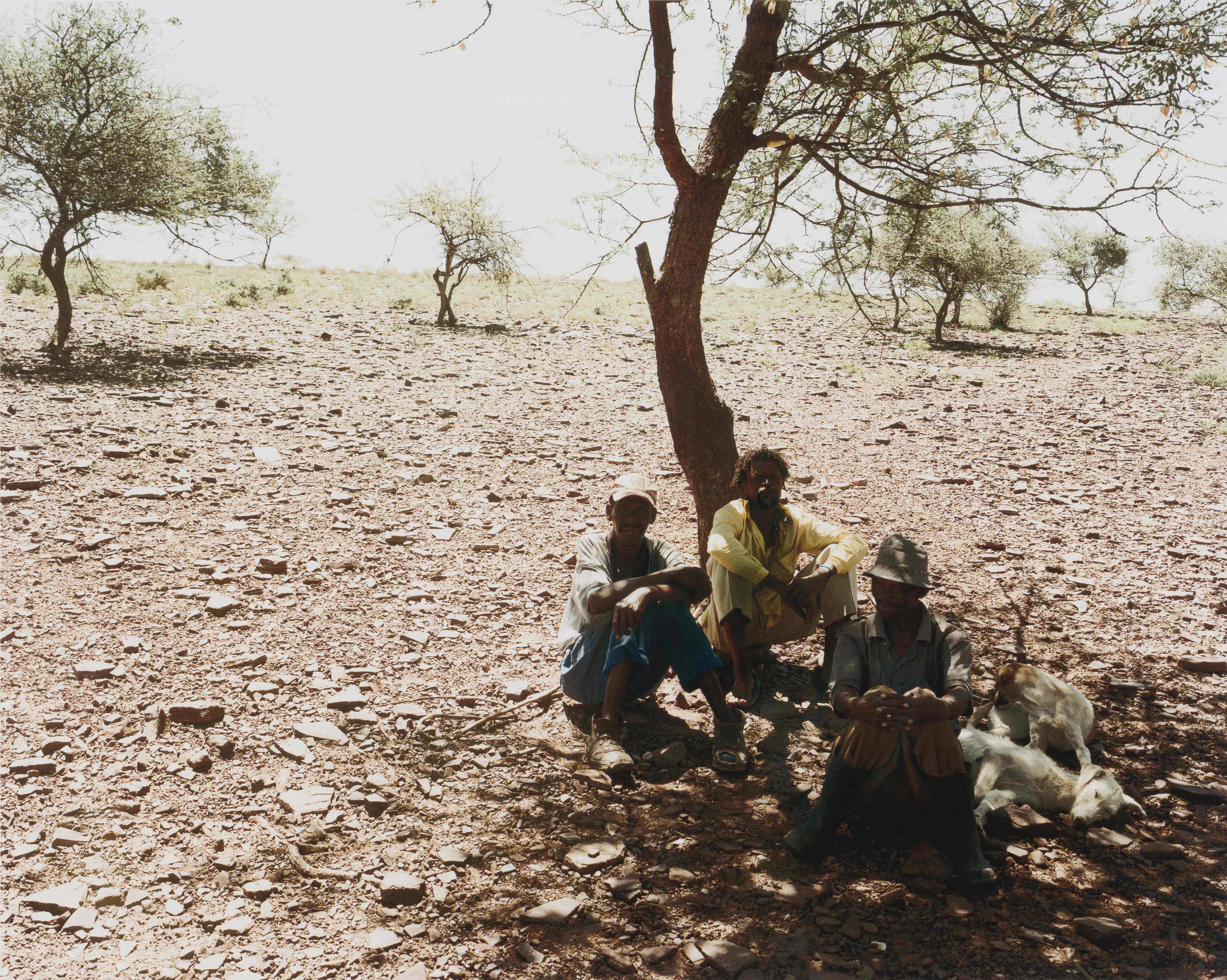
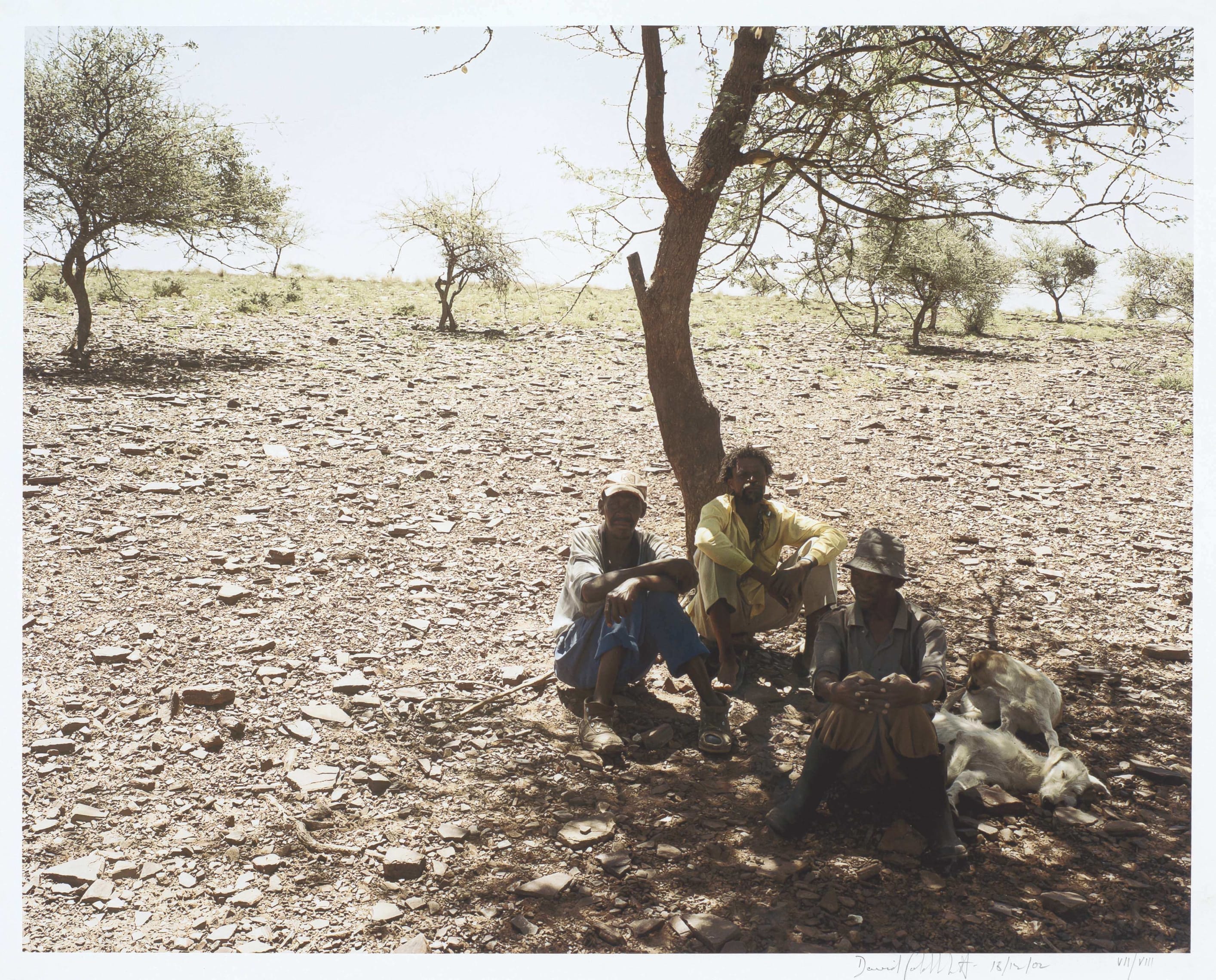
In this poignant artwork by David Goldblatt, three men are depicted resting at the side of a railway track that runs between the Bute Asbestos Mine and Heuningvlei in Northern Cape. The scene captures the starkness of the environment, highlighting the men’s weary expressions against a backdrop of industrial desolation.

This silver gelatin print by David Goldblatt depicts a scene from the Semi-Final of the Miss Lovely Legs Competition, set in a hypermarket. The artwork likely features contestants showcasing their legs in a lively, public setting, reflecting the culture and social dynamics of South Africa in the 1980s.

This artwork features a silver print portrait of Miriam Diabe, a housewife residing in Orlando East, Soweto. The photograph, taken by David Goldblatt in 1972, likely highlights her daily life and environment, reflecting the socio-cultural context of the time.

This gelatin silver print by David Goldblatt, part of the 'On the Mines' series, likely features a boss boy, a figure of authority in a mining context. The print, measuring 29 by 30 cm, captures the essence of the mining industry, showcasing the human element within it, possibly highlighting themes of labor and power dynamics.

This gelatin silver print by David Goldblatt features a greaser working at the No. 2 North Steam Winder of the Randfontein Estates Gold Mine in 1965. The photograph likely emphasizes the gritty reality of mining life, showcasing the greaser in a moment of labor, surrounded by industrial machinery and the stark environment of the mine.

This color photograph by David Goldblatt features a serene scene on the stoep in Hondeklipbaai, Northern Cape, taken on September 13, 2003. The image showcases the unique architectural details and the surrounding landscape, reflecting the essence of South African life. The artwork is framed, signed, dated, and numbered 1/10, emphasizing its limited edition status.

This gelatin silver print by David Goldblatt features a scene from Troyeville and Hillbrow, Johannesburg, taken in 1974. The photograph likely showcases urban life, architecture, and the social atmosphere of the area during that time, reflecting the historical context of South Africa.

This gelatin silver print likely depicts a kitchen interior at 1510 Emdeni South, Soweto, highlighting the everyday life and domestic environment of its inhabitants. The monochromatic tones emphasize textures and details, creating a poignant representation of the space.

In a poignant scene, three men are depicted resting at the side of a track that connects the Bute Asbestos Mine and Heuningvlei in Northern Cape. The photograph, created by David Goldblatt, conveys a sense of stillness and reflection amidst the rugged landscape, highlighting the human experience in an industrial setting.

David Goldblatt's 'On The Bus' is a gelatin silver print that likely depicts a scene from public transportation, showcasing the everyday lives of passengers. The work is signed and features a copyright stamp on the reverse, indicating its authenticity and significance in the realm of documentary photography.

This archival pigment ink print by David Goldblatt features Ugqirha Wisintu Dr. Paul, captured in Hofmeyer, Eastern Cape on August 4, 2006. The artwork is printed on cotton rag paper, showcasing a blend of documentary photography and portraiture that reflects the cultural context of the subject.

This artwork commemorates the encampment of Griqua leader Adam Kok III and his people, showcasing a monument set against a backdrop of the Maluti and Drakensberg Mountains. The piece reflects on themes of migration and history, likely featuring a stark and evocative landscape that emphasizes the journey of the Griqua people.

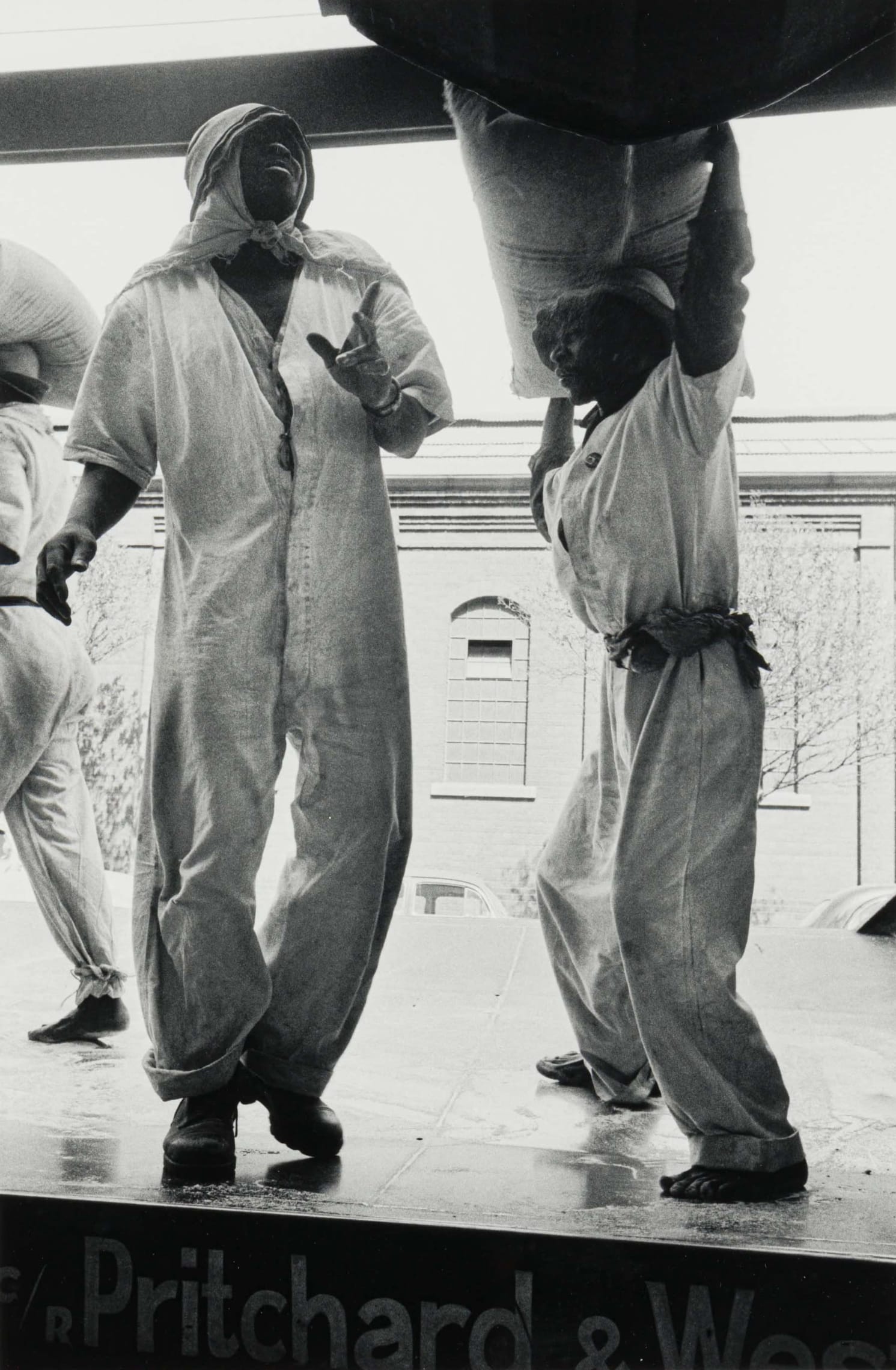
This gelatin silver print features Nyasa miners engaged in their work, showcasing their determination and the harsh realities of mining life. The image is part of David Goldblatt's 'On The Mines' series, emphasizing the human experience within the mining industry.

This vintage silver print by David Goldblatt captures a poignant moment of a young boy, known as Nel's son, in December 1967. The photograph is signed, titled, and dated on the reverse, showcasing Goldblatt's signature style of documentary photography that reflects on South African life and culture.

This gelatin silver print captures a railway shunter in a moment of work, reflecting the daily life and labor of Afrikaners. The image likely emphasizes the industrial setting, with a focus on the shunter's interaction with the railway environment, embodying themes of heritage and identity.

A photographic print capturing a vibrant scene of advertisements plastered on the wall at the base of the Telkom Microwave Tower in Hillbrow, dated January 15, 2002. The artwork reflects urban life and commercial culture in South Africa, showcasing the dynamic environment of the area.

This photographic print by David Goldblatt captures Victoria Cobokana with her children, showcasing the intimate bond of family. The image likely reflects the cultural and social context of South Africa, emphasizing the everyday life and experiences of its people.

This limited edition book by David Goldblatt showcases 27 black and white photographs, bound in a hardback with black cloth and housed in a black linen slipcase. The book is signed and numbered, highlighting its exclusivity as part of a special edition with a gelatin silver print.

A poignant black and white silver print capturing a group of migrant workers waiting for a train at Mayfair Station in Johannesburg. The photograph, taken by David Goldblatt in 1952 and printed in 1981, reflects the struggles and resilience of individuals in transit, emphasizing their expressions and the surrounding environment.


This striking black-and-white photograph by David Goldblatt features a prostitute in Fordsburgh, Johannesburg, from 1975. The image likely conveys the raw realities of urban life, emphasizing the social context and human experience of the time, characterized by stark contrasts and emotional depth.

This artwork by David Goldblatt depicts a monument honoring Griqua leader Adam Kok III and his people, who trekked across the Maluti and Drakensberg Mountains. The piece captures the essence of their journey and historical significance, likely featuring elements of the landscape and memorial aspects.

This artwork features a miner standing on the bank in City Deep, Johannesburg, showcasing the gritty reality of mining life in the 1960s. The platinum print, created by David Goldblatt, emphasizes the miner's presence against the backdrop of the mining landscape, reflecting the socio-economic conditions of the time.

A striking portrait of Daniel Cloete, a goat farmer from Pootjiespram in the Richtersveld region of Northern Cape, South Africa. The photograph, taken by renowned artist David Goldblatt in December 2003, showcases the rugged landscape and the essence of rural life, emphasizing the connection between the farmer and his environment.

This silver gelatin print by David Goldblatt depicts an amateur boxing match at the town hall, highlighting the raw energy and emotion of the fighters. The image likely features dynamic poses, dramatic lighting, and a sense of urgency, encapsulating the spirit of local sports culture.

In this silver gelatin print by David Goldblatt, a young girl is seen joyfully posing in her new tutu on a stoep, showcasing the innocence of childhood. The image likely captures the textures of the tutu and the surrounding environment, reflecting a moment of playfulness and celebration.

This artwork features a historic house located on Magpie Street in Kensington, showcasing the architectural details and surroundings in a silver gelatin print. The selenium toning adds depth and warmth to the image, emphasizing the textures of the building and its environment, reflecting David Goldblatt's keen eye for capturing the essence of South African life.

This artwork features three gelatin silver prints by David Goldblatt, depicting poignant moments in South Africa from 1972 to 1977. One print shows Ozzie Docrat with his daughter in their shop before its destruction, while another captures a scene in a pub in Vredeorp. The third print illustrates the struggles of individuals in Soweto, emphasizing the significance of identity documents.

This artwork features two gelatin silver prints by David Goldblatt, showcasing South African scenes from 1966 and 1989. The first print captures a speculative development styled as 'authentic Cape Dutch,' while the second portrays Elof Street in May 1966. Each print is signed and dated on the verso.

This black and white silver gelatin print by David Goldblatt features a moment before an amateur boxing match at the Town Hall in Boksburg, South Africa, taken in 1980. The image likely conveys the anticipation and intensity of the sport, showcasing the atmosphere and participants involved.

This digital print by David Goldblatt showcases Tymon's Sign, a notable landmark in Oaklands, Johannesburg, created in 1999. The artwork is signed and dated, reflecting Goldblatt's keen eye for urban landscapes and cultural commentary. The image size is 56 by 70 cm, emphasizing the details of the sign and its surroundings.

This digital print by David Goldblatt captures Ericson Ngomane's advert prominently displayed on Republic Road in Darrenwood. The artwork reflects urban South African culture, emphasizing the interplay between advertising and everyday life. The image is numbered 4/6 in pencil, suggesting a limited edition.

This artwork features a series of photographs by David Goldblatt, capturing diverse aspects of South African life from 1965 to 2006. Each image, signed and dated on the back, varies in size, depicting landscapes, urban settings, and intimate moments, reflecting the social and cultural dynamics of the time.

This digital print by David Goldblatt captures a moment in Diepsloot, reflecting the vibrancy and complexity of urban life. The artwork, part of a limited edition of 10, is rendered in pigment inks, emphasizing the details and textures of the environment. Measuring 98 by 125 cm, it invites viewers to explore the nuances of community and place.

This artwork features a collection of 27 black and white photographs by renowned photographer David Goldblatt. The images capture various aspects of Johannesburg, highlighting its landscapes, architecture, and the lives of its inhabitants. The first edition is presented in a black cloth cover with a white dust-jacket, emphasizing the artistic and documentary nature of Goldblatt's work.

This silver print by David Goldblatt depicts Joubert Park in Johannesburg, taken in 1975. The artwork likely features elements of urban life, including people, architecture, and the park's environment, all rendered in striking black and white tones, reflecting the social dynamics of the time.

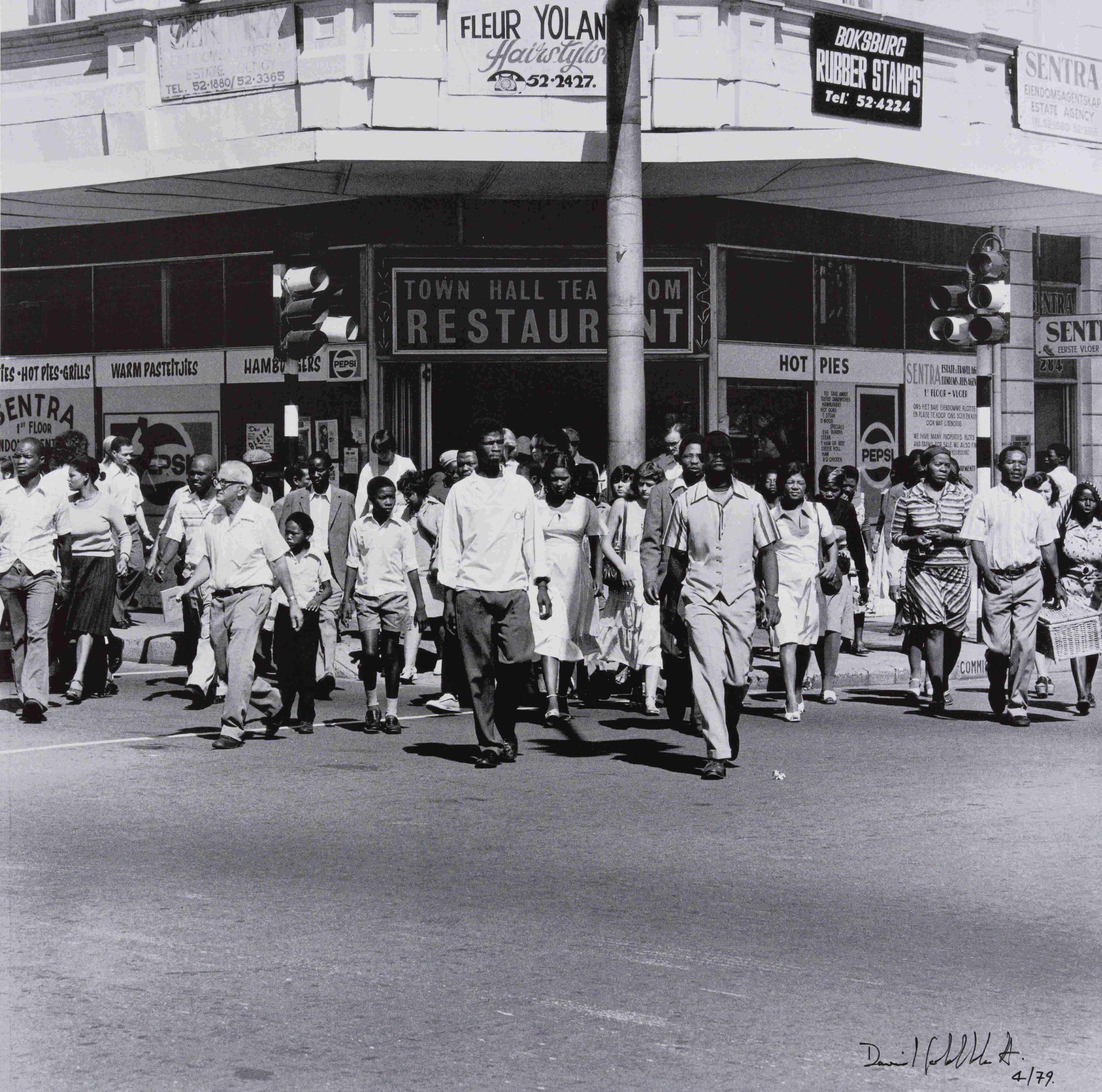
This signed photograph by David Goldblatt depicts a lively Saturday morning at the corner of Commissioner and Trichardt Streets in Boksburg. The image likely features pedestrians, vehicles, and the urban landscape, reflecting the everyday life and culture of the area during the late 20th century.

This silver print photograph by David Goldblatt captures a poignant moment featuring a prostitute in Fordsburgh, Johannesburg, taken in 1975. The image, square in format, reflects the social realities of the time, showcasing the artist's documentary style and focus on human subjects.
This signed and dated photograph by David Goldblatt depicts a lively Saturday morning at the corner of Commissioner and Trichardt Streets in Boksburg. The image likely showcases local residents engaging in daily activities, set against the backdrop of urban architecture, emphasizing the social and cultural dynamics of the area.

This silver print by David Goldblatt depicts Zoo Lake in Johannesburg, featuring tranquil waters reflecting the surrounding lush greenery. The composition likely conveys a sense of calm and connection to nature, characteristic of Goldblatt's observational style. The artwork is presented on a larger sheet, with the artist's signature and details inscribed on the back.

This iconic gelatin silver print by David Goldblatt features a scene from Mofolo South, Soweto, taken in September 1972. The photograph, signed and dated on the verso, measures 35 x 27.3 cm and is part of significant collections, showcasing the social landscape of South Africa during that era.

This artwork features a collection of six signed first edition photobooks by renowned photographer David Goldblatt. The collection includes 'In Boksburg' (1982), 'On the Mines' (1973), 'Lifetimes Under Apartheid' (1986), 'The Transported' (1989), and 'Double Negative, A Novel' (2010), highlighting Goldblatt's exploration of South African life and history.

This artwork, 'Ufo' by David Goldblatt, is a gelatin silver print created in 1975. It is characterized by its striking black-and-white imagery, typical of Goldblatt's work, which often captures social and cultural themes. The print is on baryta paper, measuring 30.5 x 38.5 cm, and is part of a limited edition.

This unique hand-printed gelatin silver print by David Goldblatt captures a house painter in his home in Hilbrow, South Africa, from 1973. The artwork showcases the intimate and personal environment of the painter, emphasizing the details of his surroundings and the essence of domestic life in that era.

This artwork by David Goldblatt depicts a moment in 1969 where a team is seen loading small rocks into a kibble after larger rocks have been added. The scene reflects the manual labor and industrious spirit of the time in South Africa, emphasizing the connection between people and their work environment.

The artwork likely depicts the book cover for 'On The Mines' by David Goldblatt, featuring a grey cloth binding and a dust jacket. The design may reflect themes of mining and social commentary, with a focus on South African landscapes and the human experience in the mining industry.

Three men are depicted resting at the side of a dusty track that connects the Bute Asbestos Mine and Heuningvlei in Northern Cape. The scene captures a moment of pause in a rugged landscape, highlighting the stark environment and the men’s weary demeanor.

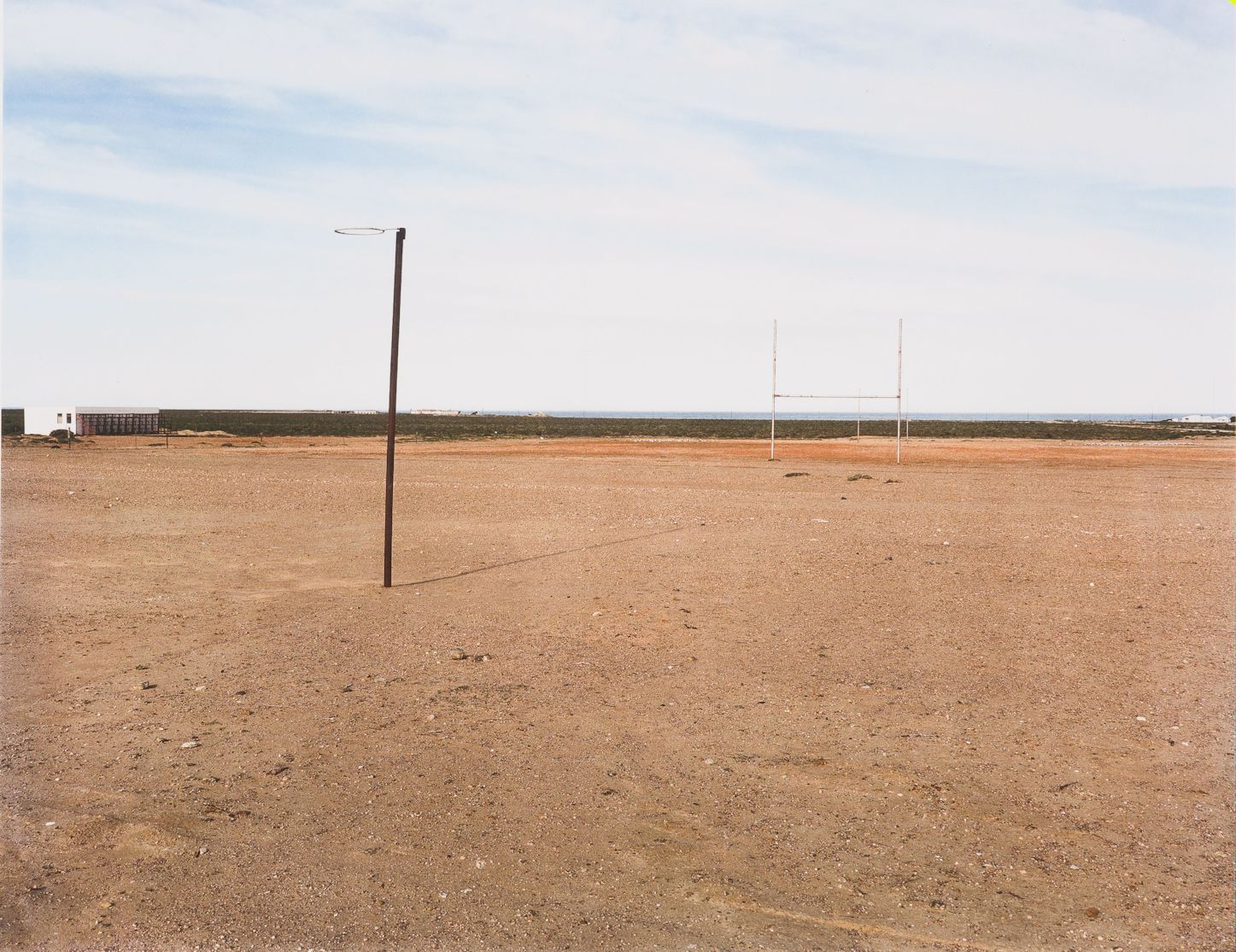
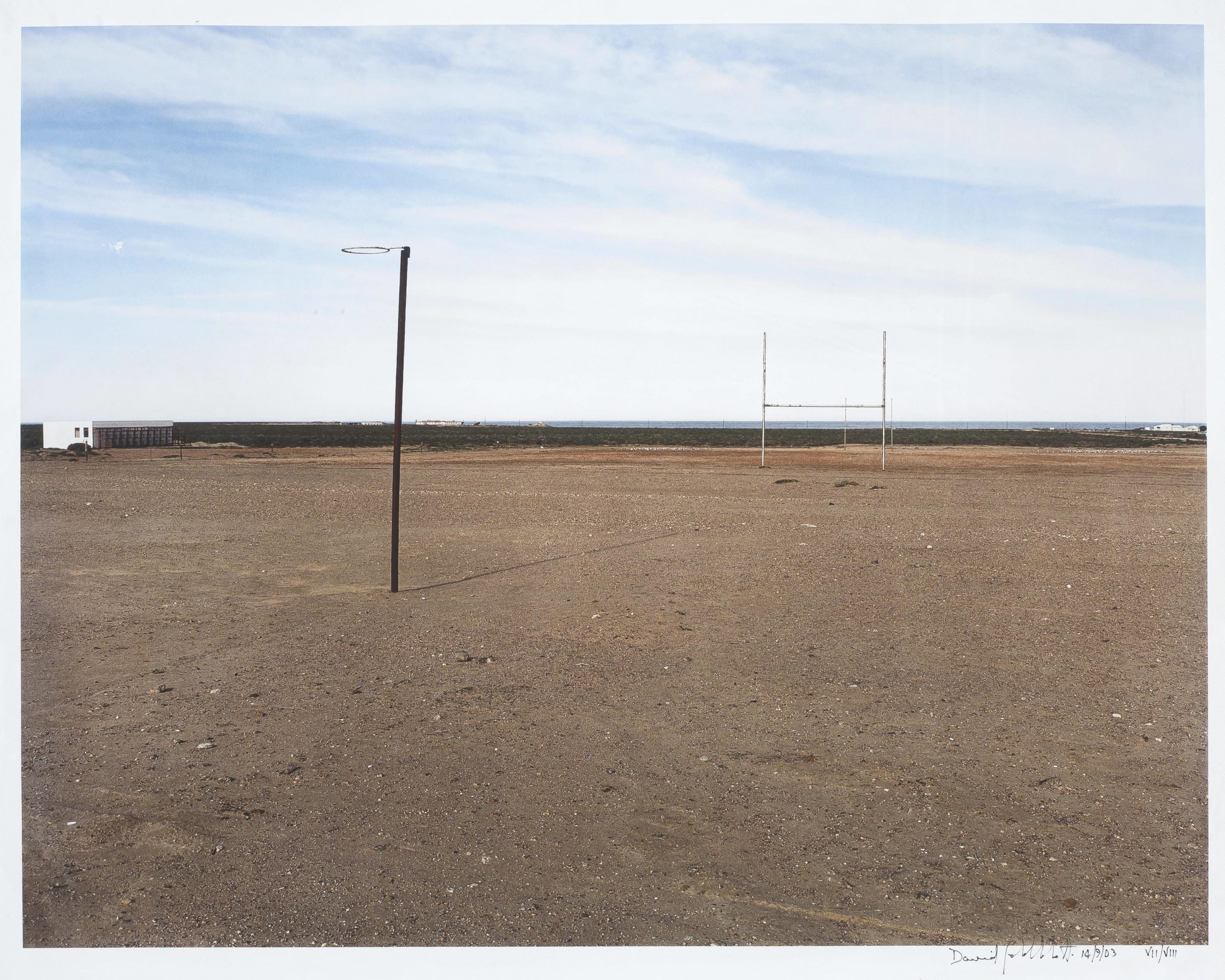
David Goldblatt's artwork depicts a sportsfield located at Hondeklip Baai, emphasizing the interplay between the natural landscape and community activities. The scene likely features elements of local culture, sports, and the surrounding environment, reflecting the essence of life in this coastal area.

This artwork features a portrait of a Bomvana woman from the Transkei region, created by photographer David Goldblatt in 1975. The silver print highlights the woman's traditional attire and cultural identity, reflecting the rich heritage of the Bomvana people. The piece is signed and dated by the artist on the verso.

This silver print photograph by David Goldblatt depicts Joubert Park in Johannesburg, taken in 1975. The image likely features elements of urban life, including people and park scenery, reflecting the social and cultural atmosphere of the time. Goldblatt's signature and details are noted on the verso.

David Goldblatt's 'Cells' is a digital print on 100% cotton rag paper, measuring 47 by 309 cm. The artwork, signed and dated 31.12.1999, likely features intricate details reflecting South African culture and society, presented in a long, narrow format that invites viewers to explore its depth.

This artwork captures a rural landscape in Groenfontein, Sutherland, showcasing a modest farmworker's cottage juxtaposed with a tall navigation beacon for air traffic. The scene reflects the intersection of agricultural life and modern technology, set against the backdrop of the Northern Cape's unique terrain.

This digital print by David Goldblatt features a focused man engaged in the meticulous task of laying tiles. The composition emphasizes the labor and skill involved in the craft, likely showcasing the textures of the tiles and the surroundings, reflecting a moment of dedication and artistry in construction.

This digital print by David Goldblatt captures the essence of the Karoo region in South Africa, highlighting its unique landscape and natural features. The artwork, signed and dated, reflects Goldblatt's keen eye for detail and composition, emphasizing the beauty of the environment.

In a historic hall at the Memorable Order of Tin Hats, Ted van Rensburg, a dancing master, observes two of his ballroom dance pupils as they swing to music from a Victor Sylvester recording. The photograph captures the lively atmosphere of the dance lesson in Boksburg, Transvaal, May 1980.

This photographic print by David Goldblatt captures a scene of carvings for sale on William Nicol Drive. The work reflects the artist's keen eye for social commentary and the everyday life of South Africa, showcasing the intricate details of the carvings and the environment in which they are displayed.

A photographic print titled 'Nqondwana' by David Goldblatt, created in 2007. The artwork likely depicts a scene reflective of South African culture or landscape, showcasing Goldblatt's signature style of documentary photography that emphasizes social and historical contexts.

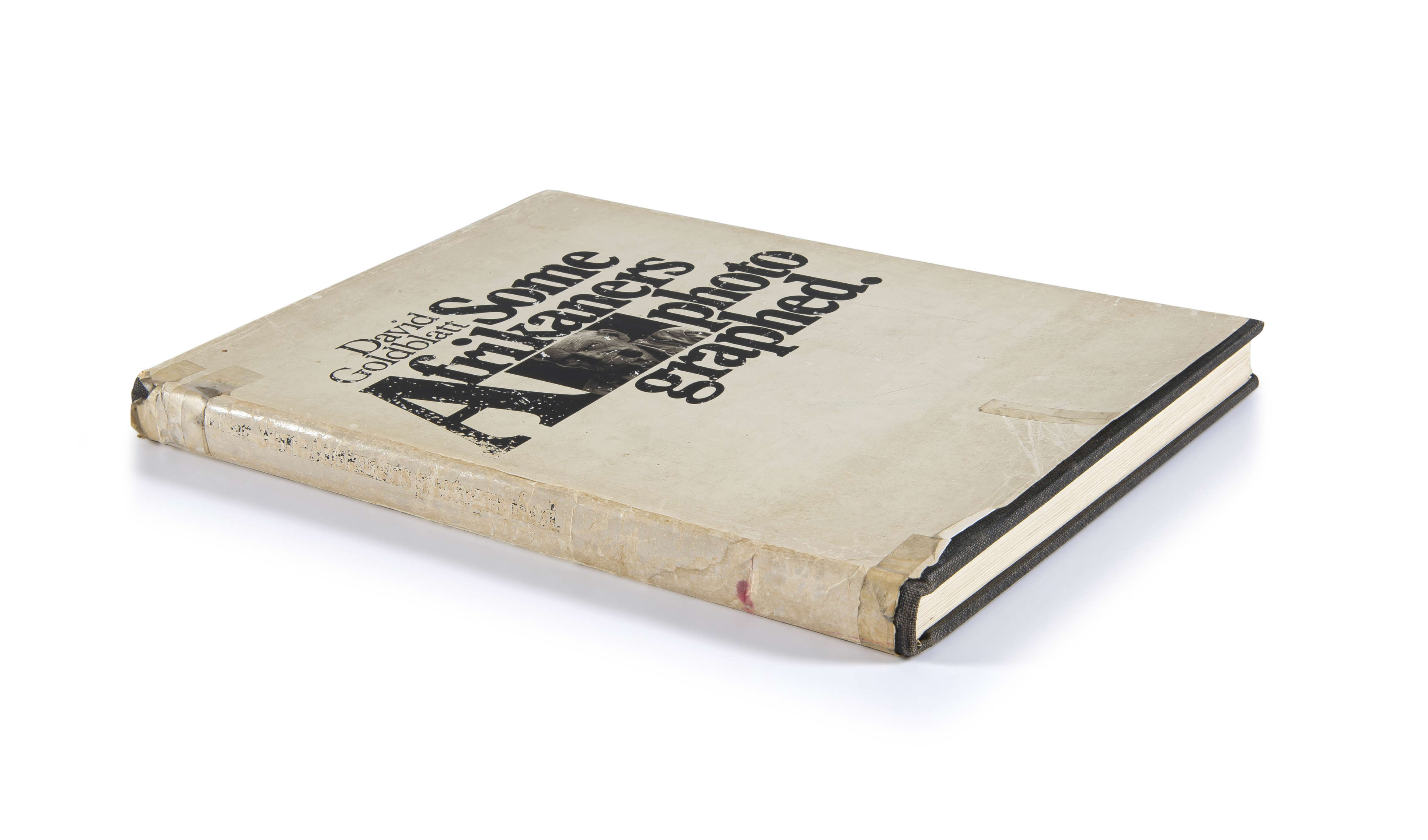
David Goldblatt's 'Some Afrikaners Photographed' is a hardcover book published in 1975, containing a series of striking photographs that explore the lives and culture of Afrikaners in South Africa. The book is signed and numbered, reflecting its limited edition status, and features a dust jacket that adds to its collectible appeal.

This digital print captures a squatter camp of foreign nationals located between the N1 highway and railway property in Woodstock, Cape Town. The artwork highlights the stark contrast between the informal living conditions of the camp and the urban landscape, emphasizing themes of displacement and resilience.

David Goldblatt's 'Hangklip' is a gelatin silver print that captures the essence of South African landscapes. Signed and dated in 2002, this artwork reflects Goldblatt's unique perspective on his homeland, emphasizing the interplay of light and shadow in the natural environment.

This gelatin silver print by David Goldblatt features a woman sunbathing in the Fellside neighborhood of Johannesburg. The photograph likely captures the essence of everyday life in South Africa, showcasing the subject in a moment of leisure against a backdrop that reflects the local environment.

This gelatin silver print by David Goldblatt depicts a woman walking towards a trading store, holding money concealed under her blanket. The photograph, taken in 1975 near Flagstaff, captures a moment of daily life in South Africa, highlighting themes of commerce and cultural practices.

A curated collection of first edition photography books by David Goldblatt, featuring significant works such as 'Fifty-one years,' 'The Transported,' and 'Lifetimes Under Apartheid.' Each book is in mint condition, highlighting Goldblatt's impactful documentation of South African life and history, accompanied by exhibition materials.

This gelatin silver print captures David Goldblatt's self-portrait at Consolidated Main Reef Mines in Roodepoort, dated May 1967. The image likely reflects his deep engagement with South African mining culture, emphasizing themes of identity and labor. The photograph is framed, measuring 62.5 by 61.5 by 4 cm.

This silver gelatin photograph by David Goldblatt depicts a lively Saturday morning at the corner of Commissioner and Trichardt Streets in Boksburg. The image likely showcases local residents engaging in daily activities, with a focus on the urban landscape and community life, reflecting the essence of South African culture in the late 20th century.

The artwork features a first edition hardback book titled 'David Goldblatt: Some Afrikaners Photographed' published in 1975. The dustjacket is worn, with visible tears, discoloration, and abrasions. Initial pages show signs of surface dirt, indicating age and use, reflecting the historical context of the work.

This archival digital print by David Goldblatt features three men, likely reflecting aspects of South African culture and society. The piece is signed and numbered, indicating its limited edition status. The print measures 42 by 51.5 cm and is unframed, emphasizing the raw and authentic nature of the subjects.

David Goldblatt's 'Nude' presents a human figure in a serene and contemplative pose, emphasizing the beauty of the human form. The artwork is signed and dated 23/3/07, with dimensions of 32.5 by 26 cm for the image and 40 by 30 cm for the sheet, unframed, suggesting a focus on the raw essence of the subject.

This artwork, titled 'Tondo Drawing C (With Cloud And Landscape)' by William Kentridge, showcases a circular charcoal drawing depicting a cloud and landscape, collaged onto a map page. The piece is framed and measures 34cm in diameter, with an overall frame size of 46.5 by 46.5 by 4cm.

This silver gelatine print features a fifteen-year-old youth who has just been released from detention in South Africa, taken by renowned photographer David Goldblatt in 1985. The image reflects the emotional weight of youth and freedom, emphasizing the impact of socio-political issues in South Africa during that era.

This 1993 gelatin silver print captures a portrait of Nelson Mandela, highlighting his dignified presence. The photograph features subtle handling creases in the lower portion, with annotations in felt-tip pen along the right edge, and date stamps on the verso, emphasizing its historical significance.

In this gelatin silver print by David Goldblatt, a young woman is depicted holding money discreetly under her blanket while walking towards a trading store. The scene captures the essence of daily life in Transkei, showcasing the woman's expression and the surrounding environment.

This archival pigment print by David Goldblatt captures a disused mineshaft in Pomfret, North West Province, showcasing the stark and haunting beauty of the abandoned site. The work, signed and numbered, emphasizes the themes of decay and the remnants of industrial activity, characteristic of Goldblatt's exploration of South African landscapes.

This untitled portrait by David Goldblatt features a man captured in a striking interplay of black, sepia, and bistre tones. The artwork includes the original negative and six prints, with one print inscribed ‘Plaat I’ and others noting their color tones on the verso. The piece is unframed and measures 30 x 24 cm.

This digital print by South African artist David Goldblatt captures the essence of a sports field at Hondeklipbaai. The artwork is signed, dated 14/9/03, and numbered 39/60 in pencil, showcasing a scene likely rich in texture and detail, reflecting the landscape and cultural significance of the location.

This artwork features a Pondo peasant woman from Coffee Bay, South Africa, as captured by renowned photographer David Goldblatt in 1975. The image likely emphasizes the woman's traditional attire and the cultural context of her environment, reflecting the social and historical aspects of rural life in South Africa during that era.

Two photographs by David Goldblatt depict life in Transkei, South Africa, in 1975. One features a grandmother tenderly holding a child, while the other shows a woman at a trading store, highlighting the everyday experiences and cultural context of the region during that time.

This collection features four photographs by South African artist David Goldblatt, part of his series 'South Africa: The Structure of Things Then'. The images vary in size and likely depict significant aspects of South African life and landscape, capturing the essence of the country's social and physical structures.

This digital print by David Goldblatt captures the essence of the road leading to Nqondwana in Transkei. The artwork likely features expansive rural landscapes, emphasizing the natural beauty and cultural significance of the region. Signed and dated by the artist, it reflects Goldblatt's keen eye for detail and storytelling through imagery.

This black and white digital photographic print by David Goldblatt depicts a bustling Saturday morning at the corner of Commissioner and Trichardt Streets in Boksburg. The scene likely features urban life with pedestrians, vehicles, and local architecture, reflecting the everyday moments of the community.

This artwork features Mrs. Miriam Diale seated in her bedroom, surrounded by personal belongings, reflecting the intimate atmosphere of her home in Orlando East, Soweto. The platinum print, created by David Goldblatt in 1972, captures the essence of domestic life and the cultural context of Johannesburg during that era.

This artwork features a silver gelatin photograph of the bowling green and clubhouse at Crown Mines in Johannesburg, taken by David Goldblatt in 1969. The image likely showcases the lush green of the bowling lawn contrasted against the architecture of the clubhouse, reflecting the social atmosphere of the location.

This platinum-palladium print captures a woman sitting gracefully on a bed in a simple bedroom setting. The soft, diffused light highlights her contemplative expression and the textures of the worn walls. The monochromatic tones evoke a sense of nostalgia and intimacy, reflecting the personal space and life within Soweto.
The artwork is a first edition hardback book titled 'David Goldblatt: Some Afrikaners Photographed', published in 1975. The dustjacket shows significant wear, with tears, discoloration, and abrasions, while the initial pages have surface dirt, indicating its age and use.
This silver gelatin print likely depicts a gathering at the Voortrekker Monument, emphasizing the solemnity and historical significance of the Day of the Covenant. The photograph may showcase a diverse group of people, dressed in traditional attire, with the imposing monument in the background, reflecting themes of heritage and remembrance.

This silver gelatin print by David Goldblatt captures the Voortrekker Monument, a significant site in South Africa, during the Day of the Covenant. The artwork, hand-printed and signed by the artist, reflects a moment in history, showcasing the monument's architectural features and the surrounding atmosphere on that day.

This artwork features a portrait of a man, rendered in rich black, sepia, and bistre tones. The piece includes the original negative and six prints, with one print inscribed ‘Plaat I’ and the others noting their color tones. The dimensions of the plate are 30 x 24 cm, emphasizing the intimate nature of the portrait.

This c-print photograph by David Goldblatt showcases the rugged landscape of Echo Canyon in Richtersveld, taken on December 25, 2003. The artwork is framed artistically, emphasizing the expansive view and intricate details of the canyon's terrain, inviting viewers to explore the natural beauty of this remote location.

This silver print by David Goldblatt, titled 'Ufo', features a scene from May 1975, characterized by its stark black and white contrast. The photograph showcases Goldblatt's unique perspective and attention to detail, reflecting the essence of the time and place it represents. The work is part of a limited edition of 10, emphasizing its exclusivity.

This artwork captures a lively scene from the Semi-Final of the Miss Lovely Legs Competition held in a hypermarket in Boksburg on June 28, 1980. The gelatin silver print likely features contestants showcasing their legs amidst a bustling crowd, reflecting the vibrant social atmosphere of the time.

The artwork 'The Sports Field At Hondeklipbaai' by David Goldblatt features a tranquil sports field set against the backdrop of the Hondeklipbaai landscape. The use of pigment ink on cotton rag paper enhances the natural colors and textures, evoking a sense of place and the interplay between human activity and nature.

David Goldblatt's photographic work captures the essence of Afrikaner life, presenting a series of portraits and candid shots that reflect their culture, traditions, and social contexts. The images likely depict individuals and groups in diverse environments, emphasizing the human experience and historical narratives within the Afrikaner community.

This artwork features a series of seven gelatin silver prints, including a notable piece of Margaret Menigana taken on a Sunday afternoon in Soweto, 1970. The photographs, varying in size, showcase candid moments and the essence of daily life in the community, with some prints signed and annotated by the artist, David Goldblatt.

This digital print features the Pomfret Asbestos Mine mill, highlighting its industrial structure and surroundings in the North-West Province. The artwork, created by David Goldblatt, is signed and numbered, reflecting a moment in time captured on 20 December 2002. The piece emphasizes the starkness of the mining landscape.

This artwork captures a tranquil farmyard scene at Rooidam, showcasing a bicycle leaning against a skerm, with a farmhouse in the background. The setting is between Carnavon and Brandvlei, evoking a sense of rural life and simplicity, dated 12 August 2008.

This artwork features a digital print by David Goldblatt, depicting a serene rural landscape on the farm Rooinek in Seweweekpoort, Western Cape. The piece is signed and dated 18 February 2006, showcasing the artist's keen eye for detail and composition. The image size is 98.5 by 125 cm, printed on high-quality cotton rag paper.

This gelatin silver print features a portrait of Margaret McIngana, who later gained fame as the singer Margaret Singana. The photograph, taken in Zola, Soweto in October 1970, captures her essence and character, reflecting the cultural context of the time.

A rustic barber's chair constructed from mining timbers is positioned outside a compound on the Luipaardsvlei Estates in Krugersdorp. The scene captures a moment from 1965, reflecting the unique blend of industrial materials and everyday life in South Africa.

This silver print by David Goldblatt features a touching moment between a grandmother and her grandchild in Transkei, showcasing their intimate bond. The photograph, created in 1975, is square in shape and highlights the cultural context of the subjects, emphasizing their expressions and surroundings.

This digital print by David Goldblatt captures a moment of a sheriff knocking at a door in Oudtshoorn, Western Cape, showcasing themes of authority and social conditions. The image likely features a stark contrast between the figure of the sheriff and the surrounding environment, emphasizing the narrative of law and order.

The artwork features Soccer City Stadium, built for the 2010 Soccer World Cup, juxtaposed with the remnants of Shareworld, a once-thriving theme park in Soweto that went bankrupt in the 1980s. The scene highlights the stark contrast between the vibrant energy of the stadium and the desolation of the ruins, reflecting the socio-economic history of the area.

This digital print features Soccer City Stadium, built for the 2010 Soccer World Cup, prominently displayed next to the ruins of Shareworld, a defunct theme park from the 1980s. The artwork captures the juxtaposition of vibrant sports culture against the backdrop of urban decay, rendered in rich pigment inks on high-quality cotton rag paper.

This color photograph by David Goldblatt depicts a serene moment on the stoep in Hondeklipbaai, Northern Cape. The image, framed and signed, showcases the unique architecture and landscape of the region, reflecting the artist's keen eye for detail and composition. The work is part of a limited edition, emphasizing its artistic significance.
Ranking Global de Arte Moderno2016 20th/100
¿Interesado en tasar la obra de este artista?Acceda a los precios de venta históricos, a las estimaciones de expertos y a nuestras colecciones privadas.
Unirse al Círculo¿Ya es miembro? Iniciar sesión