

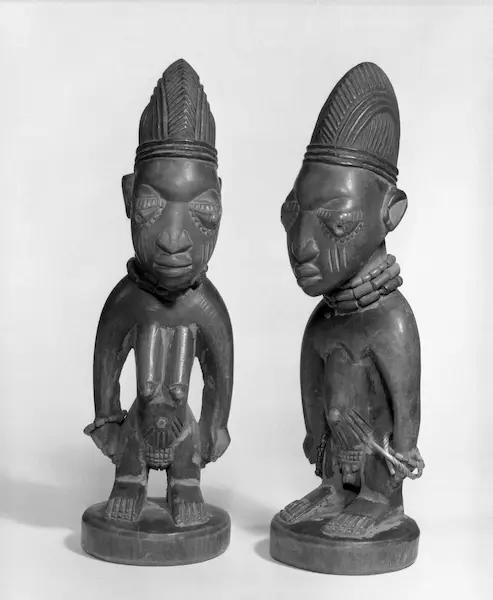
Prospective collectors of ancient African art can expect an adventure that is as rich in aesthetic pleasure as it is in intellectual enrichment. And while they should not be discouraged by the multiplicity of sources and objects, inexperienced collectors should know the origins and practices related to the works they intend to buy. The touching rituals associated with ere ibeji figures are among the best known African traditions, but too few buyers consider the material aspects of these works of art when making their choice at an auction or gallery, despite the fact that these fundamental elements are highly instructive and should guide the decision to buy.
Need a professional valuation for a similar piece?
Scientific and artistic investigations by researchers and institutions are gradually enabling us to identify, learn about, and recognize classical African artists. In the case of the Yoruba, the choice of artist was largely dependent on the cult practice associated with ere ibeji. These elegant figures were a form of consolation for the death of one or both of a pair of twins—the objects of a cult in Nigeria and, to a lesser extent, in Benin. The indispensable ritual passage between the artist’s workshop and the family home was intended to imbue the sculpture with spiritual strength, rendering it capable of reuniting twin souls parted by death.
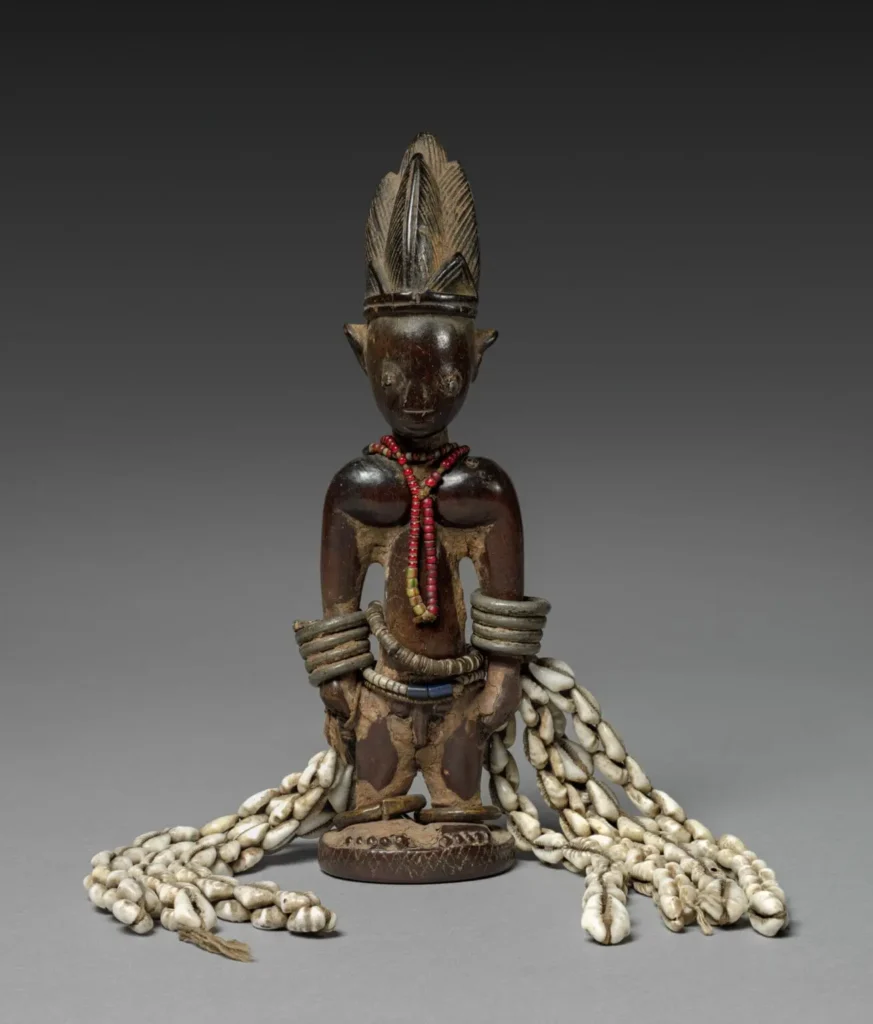
Ere ibeji were identically carved to signify the “unity in duality” symbolically represented by twins, and their stylized aesthetic ensured the metaphysical value of their function. Their small size made them easy to handle, wash, rub with oil, and dress, which gave them a characteristic patina over time. Rubber tree wood was generally preferred for ere ibeji figures due to the finesse of its grain, its hardness and the mystical power associated with it.
What you should know about ere ibeji
Due to their popularity, the prices of ere ibeji have risen sharply—sometimes sky-high when they have a prestigious and/or historically reliable provenance. Collectors should obviously pay attention to such details. If a piece is of unknown origin, its material aspects should be studied: does the statuette have a patina? Does it look smooth and sleek? Is if adorned with beads or jewelry? Is it polychromed? Is it easy to handle? Is the wood species identifiable? Is it naturalistic or conceptual in style?
Curious about the latest auction prices for Yoruba Ere Ibeji? Use our Free Auction Search Tool to see real-time market data.
Ere Ibeji: honing your eye, adding to your knowledge
To enhance your knowledge of ere ibeji, observe the sculptures on display at the Musée du Quai Branly in Paris, or visit the same museum’s study and research media library. To learn more, Making History: African Collectors and the Canon of African Art, by art historian Sylvester Okwunodu Ogbechie, is a serious reference work and a must for collectors of classical African art.
Understanding the specific aesthetics of these twins is crucial, but it is only one part of a professional appraisal. To fully grasp the worth of your piece, you should refer to our Expert Guide: The 3 Pillars of Classical African Art Value
Why trust our expertise?AfricArtMarket is the leading online authority for African art appraisal. Providing continuous market analysis since 2015, we help collectors secure their investments and accurately value their heritage in today’s global market.

